Ben Gurion Airport Arrival Tips
What to Expect After Landing in Israel
Last updated: August 2026 by Moshe Barak — Israel travel and transportation expert with more than 20 years of experience helping international travelers navigate Israel.
Arriving at Ben Gurion Airport is usually straightforward, but knowing what happens at passport control, why you must keep your entry card, and how transportation changes during Shabbat can prevent unnecessary delays.
This guide takes you through the complete arrival process – from leaving the aircraft and passing through border control to collecting your luggage, clearing customs, finding useful airport services, and continuing to your destination.
💡 Just so you know: Some links on this page are affiliate links, meaning I may earn a small commission if you make a purchase or booking, at no extra cost to you. This helps me keep this site running – thank you!

Ben Gurion Airport Arrival Process at a Glance
Most international visitors follow this sequence after landing:
Leave the aircraft → Follow signs to passport control → Pass through border control → Receive a blue entry card → Collect checked luggage → Pass through customs → Enter the public Arrivals Hall → Continue to your destination
As a practical rule, allow approximately one to two hours between landing and leaving the airport. The process may be considerably faster, but passport-control queues, a remote aircraft parking position, additional questions, and delayed luggage can all increase the time required.
When arranging transportation, provide your flight number rather than agreeing to a pickup time based only on the scheduled landing time.
Before You Fly
Check Whether You Need an ETA-IL or Visa
Travelers from visa-exempt countries generally need an approved ETA-IL electronic travel authorization before traveling to Israel.
The official ETA-IL costs 25 ILS and is normally valid for multiple visits over a period of up to two years or until the passport used for the application expires, whichever comes first. Each visit is generally limited to 90 days. The passport must normally remain valid for at least three months from the date of arrival.
Submit the application only through the official Israeli government website. Applications are usually processed within 72 hours, so do not leave yours until the day of departure. Unofficial agencies may charge substantially more for submitting the same application.
An approved ETA-IL allows you to travel to an Israeli border crossing, but it does not replace border control or guarantee admission. The final entry decision is made when you arrive.
Travelers who are not eligible for ETA-IL should confirm the applicable visa and passport requirements with an Israeli embassy or consulate.
Keep These Details Accessible
You may not be asked to present every document, but keep the following information available on your phone or in printed form:
- Your approved ETA-IL or visa
- The name and address of your first accommodation
- Your return or onward flight details
- A basic explanation of your itinerary
- Contact details for anyone you are visiting
- Your airport-transfer confirmation, when applicable
- Travel-insurance documents and emergency contacts
💡Travel insurance reminder: Before departure, confirm that your policy remains valid for Israel and provides the level of medical, cancellation, disruption, and baggage coverage you require. For broader pre-trip advice, see Israel Travel Tips for First-Time Visitors.

Step 1: Follow the Signs to Passport Control
After leaving the aircraft, follow the signs for Arrivals and Passport Control. Depending on where the plane is parked, you may enter the terminal through a boarding bridge or travel from the aircraft by airport bus.
You do not collect checked luggage before passport control.
Current terminal arrangement: As of August 2026, all arriving international flights are processed through Terminal 3. This current operational arrangement may change in the future when some international arrivals return to Terminal 1. Check your airline’s information or the official Ben Gurion Airport flight board shortly before traveling rather than relying on older airport guides.
Step 2: Passport Control and Your Blue Entry Card
Using the Correct Passport-Control Line
Foreign passport holders arriving in Israel currently use the staffed passport-control counters. The biometric arrival stations located near the concourses are intended for Israeli passport holders.
The border-control officer may ask straightforward questions such as:
- What is the purpose of your visit?
- How long will you be staying?
- Where will you be staying?
- Do you know anyone in Israel?
- Have you visited Israel before?
- Which places do you plan to visit?
Answer clearly, calmly, and truthfully. Most visitors complete the process without difficulty, although some travelers may be directed to a separate area for additional questions.
Keep your accommodation address and return or onward flight information accessible in case the officer asks to see them.
Keep Your Blue Entry Card
Instead of placing an entry stamp in most foreign passports, Israeli border control issues visitors a small blue entry card.
Place it inside your passport immediately and keep it throughout your stay. It serves as evidence of your entry status and may be requested when checking into accommodation or dealing with immigration-related matters.
The card is also required when claiming an eligible tourist VAT refund before departure. The airport states that the refund will not be processed without the blue card issued at passport control.
Taking a photograph may provide a useful record of the details, but it does not replace the original card.
Step 3: Baggage Claim and Customs
Collecting Your Luggage
After passport control, follow the signs to Baggage Claim and check the information screens for your flight number and assigned carousel.
Keep your checked-baggage claim tags until you have collected every checked item. This is particularly important when traveling with several suitcases or as part of a group.
Before leaving the carousel area, check that each suitcase belongs to you. Similar-looking bags are common, so compare the baggage-tag number when necessary.
What to Do If Your Luggage Does Not Arrive
Do not leave the baggage-claim area without reporting missing or damaged luggage.
Problems involving delayed luggage, belongings left on an aircraft, and items lost near the baggage carousels are handled by the airline or the ground-handling company serving your flight – not by the airport’s general Lost & Found office.
Find the appropriate baggage-service counter and:
- Report the missing or damaged item.
- Obtain a written baggage report and reference number.
- Provide the address of your accommodation in Israel.
- Keep your checked-baggage tags and all airline correspondence.
- Contact your travel insurer when appropriate.
The airport’s general Lost & Found service is intended for belongings forgotten elsewhere in the passenger halls.
Passing Through Customs
After collecting your luggage, continue through one of two customs channels:
Green channel: Use this when you have nothing to declare and all goods are within the applicable personal allowances.
Red channel: Use this when you are carrying goods that must be declared, exceed an allowance, require permission, or when you are unsure which channel applies.
Passing through the green channel is treated as a declaration that you are not carrying anything that must be reported. When in doubt, use the red channel and ask a customs officer.
Travelers carrying cash and other reportable monetary instruments at or above the current reporting threshold of 50,000 ILS must submit a declaration. The money itself is not prohibited, but the reporting requirement applies.
Import rules vary for food, plants, medicines, valuable items, commercial goods, and other controlled products. Rather than relying on a simplified list, check the official Customs Guide for Tourists and Foreign Residents before traveling.
Step 4: Entering the Arrivals Hall
After customs, you will enter the public Arrivals Hall, also known as the Greeters Hall.
From here, you can:
- Meet a private driver, friend, or relative
- Follow the signs to the railway station
- Reach the authorized taxi stand
- Continue to public-bus stops
- Find car-rental services
- Use ATMs or currency-exchange services
- Access other passenger facilities
Take a moment to confirm your destination and pickup instructions before leaving the building. Train, taxi, bus, private pickup, and rental-car collection points are not all located in the same place.

Things to Do After Landing
Wi-Fi and Mobile Data
Connecting to the airport Wi-Fi can help you contact your accommodation or driver, check transportation updates, and download directions before leaving the terminal.
For many international visitors, the simplest mobile-data solution is to install an eSIM before departure and activate it after landing. This avoids searching for a mobile counter immediately after a long flight.
A physical SIM service also operates at the airport, but its location and opening times can change and are affected by Shabbat. Check the current airport information before relying on it.
📱 Activating mobile data before you land can make your arrival considerably easier. Compare providers, coverage and data allowances in my guide to choosing the best eSIM for Israel.
ATMs and Currency Exchange
ATMs and currency-exchange services are available in the arrivals area. The Arrivals Hall exchange counter operates according to the flight schedule, and ATMs are available in several locations around the terminal and baggage-claim area.
Credit and debit cards are widely accepted in Israel, so most travelers do not need to exchange a large amount of cash at the airport. A modest amount of Israeli currency may still be useful for small purchases and places that may not accept your particular card.
Before accepting an ATM conversion, check the withdrawal fee and exchange rate. When a machine offers to charge you in your home currency instead of Israeli shekels, compare the conversion carefully before accepting it.
Rav-Kav Card or Public-Transport App
Travelers using public transportation can pay with a Rav-Kav card or one of the supported mobile-payment applications.
A Rav-Kav may suit travelers who prefer a physical card or do not want to depend on mobile data. An app may be more convenient for a short visit, provided your device and payment method are supported.
You do not need to stop and buy a Rav-Kav simply because you have arrived at the airport. First decide which transportation method you will use and how often you expect to travel by public transport.
💡 Planning to use trains, buses or light rail during your trip? These practical tips for getting around Israel explain how to pay, which transportation apps to use and what visitors should know about the transportation system in Israel.
Transportation from Ben Gurion Airport
Once you enter the Arrivals Hall, you can continue by train, public bus, authorized taxi, private transfer, or rental car.
The best choice depends on your destination, arrival time, luggage, number of passengers, and whether you arrive during Shabbat or a Jewish holiday.
| Option | Usually Best For | Available During Shabbat? |
|---|---|---|
| Train | Tel Aviv, Jerusalem, Haifa, and other rail-connected destinations | No |
| Public bus | Selected routes and budget travel | No regular service |
| Airport taxi | Flexible door-to-door transportation | Yes |
| Private transfer | Families, groups, luggage, and advance planning | By prior arrangement and subject to availability |
| Rental car | Travelers continuing beyond the main cities | Collection arrangements vary |
The train is generally the most convenient public option when it is operating. Authorized taxis and confirmed private transfers provide direct transportation, while renting a car is most useful for travelers planning to explore several regions independently.
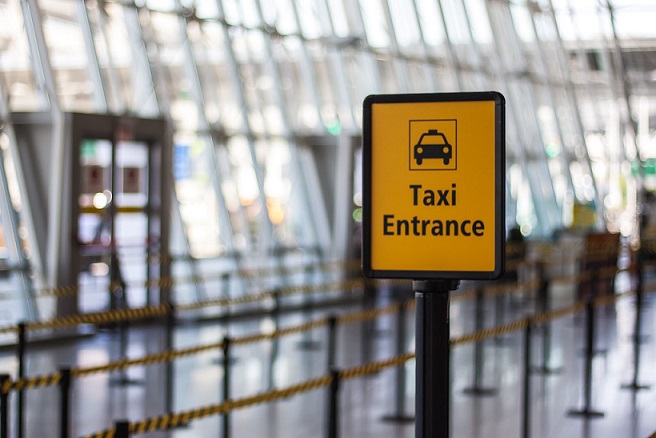
The licensed taxi stand at Terminal 3 is outside Gate 03 on the ground floor. Official airport taxi journeys are charged by meter, and the licensed service operates 24 hours a day.
Before leaving the terminal, check the latest transport timetable or confirm your pickup instructions. Airport transportation can be affected by Shabbat, Jewish holidays, engineering work, temporary disruptions, and operational changes.
Choose the Right Guide for Your Destination
For current routes, journey times, expected costs, and destination-specific advice, see:




For broader information about transport methods, fares, taxis, apps, and discontinued services, see:
- Getting Around Israel
- Taxis in Israel
- Is Uber Available in Israel?
- Is There Still a Sherut from Ben Gurion Airport?
Need Private Transportation from Ben Gurion Airport?
A pre-arranged transfer can be particularly convenient for families, groups, travelers carrying several suitcases, and passengers arriving late at night or during Shabbat.
Contact me in advance with:
- Your flight number and arrival date
- Your destination
- The number of passengers
- Your expected luggage
- Any child-seat or vehicle requirements
Arriving During Shabbat or a Jewish Holiday
Shabbat begins before sunset on Friday and ends after nightfall on Saturday. The exact times change throughout the year.
Although flights generally operate at Ben Gurion Airport during Shabbat, regular trains and public buses stop before Shabbat begins and resume only after it ends. Similar restrictions apply on major Jewish holidays.
Authorized airport taxis remain available, but weekend and holiday tariff periods are more expensive than ordinary weekday daytime travel. A private transfer may also be possible when requested and confirmed in advance. The airport’s licensed taxi service operates around the clock.
Travelers landing on Friday afternoon should not assume that they will reach the railway station before the final train. Landing time is not the same as the time you will finish passport control, collect your luggage, and leave customs.
Check the exact timetable for your arrival date and make alternative arrangements when necessary.
💡 Arriving during Shabbat or a Jewish holiday? Regular trains and public buses do not operate during Shabbat. See How to Travel from Ben Gurion Airport on Shabbat for a complete explanation of the available options.
Passengers Who Require Assistance
Passengers who require mobility or other assistance should notify their airline before traveling.
Airlines are responsible for passengers requiring assistance from the time they disembark, while the practical service at Ben Gurion Airport is provided through the relevant airline or ground-handling company. Assistance can include support leaving the aircraft and moving through the arrival process.
Do not rely solely on requesting assistance after landing. Confirm the arrangement with your airline in advance and keep the confirmation accessible.
When arranging onward transportation, also mention any wheelchair, walking aid, accessible-vehicle, or luggage-handling requirements.
Frequently Asked Questions
Your Ben Gurion Airport Arrival Checklist
Before Leaving Home
- Obtain your ETA-IL or visa.
- Confirm that your passport meets the applicable validity requirement.
- Save your accommodation address and contact details.
- Keep your return or onward flight information accessible.
- Arrange mobile data.
- Check whether your arrival falls during Shabbat or a Jewish holiday.
- Confirm transportation when public services will not be available.
- Check that your travel insurance remains valid for Israel.
After Landing
- Follow the signs to passport control.
- Use the staffed counters when traveling on a foreign passport.
- Answer border-control questions clearly and truthfully.
- Place your blue entry card inside your passport.
- Check every suitcase before leaving baggage claim.
- Report missing luggage immediately.
- Use the correct customs channel.
- Contact your driver or check the latest public-transport schedule.
- Use only licensed taxis or a confirmed transportation provider.
Ben Gurion Airport is generally easy to navigate once you understand the order of the arrival process. A few preparations before departure can save time after landing and help you begin your visit with confidence.

Thank you for visiting my website!
I’m Moshe Barak, providing private transportation across Israel for international travelers for over 20 years.
Together with my team of dedicated drivers, I offer reliable, flexible, and personalized service – with close attention to detail and a personal touch. Whether you’re visiting for business or leisure, I’m committed to making your journey as easy and enjoyable as possible.
Feel free to reach out for a quote, I’ll be happy to assist.
I look forward to being part of your journey in Israel.
Warm regards,
Moshe Barak
Request Your Airport Transfer Quote
Feel free to contact me with inquiries and requests for quotes. I’ll personally review your request and reply with availability and a confirmed price.
Don’t forget to mention:
- Your flight details including date and time of arrival
- The requested destination
- The number of passengers
- The expected amount of luggage
You can also contact me directly or call me.
Your personal information will never be shared with third parties for marketing purposes.

Discover More of Israel
Travel guides, destination ideas, and practical tips to help you plan your trip

Baptism in The Jordan River

Masada

Israel Itinerary – 5 Days
How to Get from Ben Gurion Airport to Ein Bokek
Uber in Israel

How to Get from Jerusalem to Bethlehem

Israel Itinerary – 3 Days

Haifa

Jerusalem Travel Guide

What to Eat in Israel

The Basilica of the Annunciation in Nazareth