Getting Around Israel: The Complete Transportation Guide
All Your Options for Navigating Israel Like a Local
Last updated: July 2026 by Moshe Barak — Israel travel and transportation expert with more than 20 years of experience helping international travelers navigate Israel.
Israel is a relatively compact country, but choosing the right transportation can make a major difference to your trip. Trains provide fast connections between several major cities, buses reach destinations that are not served by rail, and taxis or private transfers offer convenient door-to-door transportation. Renting a car can also be useful when exploring rural areas, national parks, the Galilee, the Dead Sea, or the Negev.
The best option depends on where you are going, how much luggage you have, your budget, and whether you are traveling on Shabbat or a Jewish holiday. Most visitors use a combination of transportation methods rather than relying on just one.
This guide explains how to get around Israel by train, bus, light rail, taxi, private transfer, rental car, and shared taxi. It also covers public transportation payments, airport travel, Shabbat limitations, city transportation, intercity routes, and practical tips for planning a smoother journey.
💡 Just so you know: Some links on this page are affiliate links, meaning I may earn a small commission if you make a purchase or booking, at no extra cost to you. This helps me keep this site running – thank you!
What Is the Best Way to Get Around Israel?
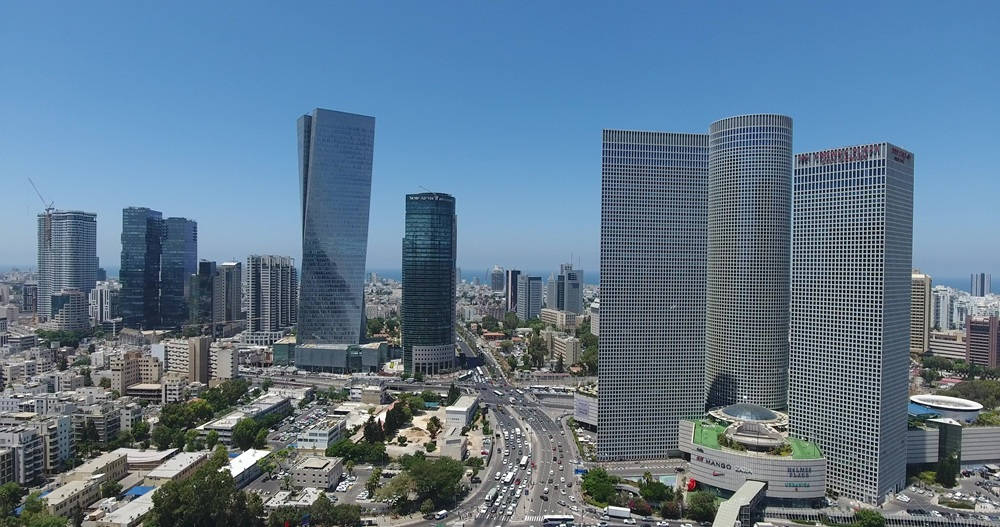
For most travelers, the most practical way to get around Israel is to combine several transportation options, choosing each one according to the route, schedule, budget, and type of trip:
- Trains between Ben Gurion Airport, Tel Aviv, Jerusalem, Haifa, and other cities served by the railway network.
- Buses and light rail for local transportation and destinations without a convenient train connection.
- Walking within compact tourist areas such as central Tel Aviv, Jerusalem’s Old City, Jaffa, and Akko.
- Taxis or private transfers for airport arrivals, Shabbat travel, heavy luggage, early departures, and direct door-to-door journeys.
- Rental cars for rural destinations, national parks, the Galilee, Golan Heights, Dead Sea, and Negev.
The following comparison provides a quick overview:
| Transportation option | Best for | Main limitation | Available on Shabbat? |
|---|---|---|---|
| Train | Fast travel between major cities | Does not reach every region | No regular service |
| Bus | Budget travel and destinations without rail service | Can be slower and require connections | Most routes do not operate |
| Light rail | Getting around Jerusalem and the Tel Aviv metropolitan area | Limited to specific urban corridors | No regular service |
| Taxi | Short trips, luggage, and last-minute travel | More expensive than public transportation | Generally available |
| Private transfer | Airport arrivals, families, groups, and direct intercity travel | Usually needs to be arranged in advance | Available by advance booking |
| Rental car | Rural areas, national parks, and flexible itineraries | Parking, traffic, fuel, tolls, and insurance | Driving is possible; collection hours vary |
1. Arriving at Ben Gurion Airport
For most international visitors, transportation in Israel begins at Ben Gurion International Airport, whose airport code is TLV.
Before leaving the terminal, it is useful to understand what to expect at passport control, baggage claim, customs, currency exchange, mobile-data counters, and the airport transportation area. My Ben Gurion Airport Arrival Tips guide explains the entire arrival process and can help you prepare before landing.
Transportation Options from Ben Gurion Airport
The main ways to travel from Ben Gurion Airport are:
- Train: Usually the fastest and least expensive option for destinations with a convenient railway connection.
- Bus: Useful for some cities and routes, although a transfer may be required.
- Licensed airport taxi: Available from the official taxi area outside the terminal.
- Private airport transfer: A pre-booked driver meets you at the terminal and takes you directly to your destination.
- Rental car: Suitable if you are beginning a wider road trip immediately after arrival.
The best option depends on your arrival time, final destination, luggage, group size, and whether public transportation is operating.
Planning your journey from Ben Gurion Airport? My destination-specific guides cover the best ways to get from TLV to major destinations, including estimated fares, travel times, and practical tips for each route:




Arriving During Shabbat or a Jewish Holiday
Israel Railways and most regular public bus services stop before Shabbat on Friday afternoon and resume after Shabbat on Saturday evening. Similar limitations apply during major Jewish holidays.
While a limited number of local or municipal weekend services operate in certain areas – particularly around the Tel Aviv metropolitan region – they do not replace the regular nationwide transportation network, so travelers should never assume that their usual weekday train or bus will be available.
When arriving during Shabbat or a holiday, the most dependable airport options are generally a licensed airport taxi, a pre-booked private transfer or a rental car collected from an operating rental desk.
👉 For more specific information and route planning tips, read: How to Travel from Ben Gurion Airport on Shabbat.
Are Sherut Services Available from Ben Gurion Airport?
Older travel guides frequently recommend shared sherut vans from Ben Gurion Airport to Jerusalem or Haifa. Travelers should be aware that the former Nesher service to Jerusalem and the former Amal service to Haifa have been discontinued.
This does not mean that every sherut route in Israel has disappeared. Some local and intercity shared-taxi routes continue to operate, but travelers should not rely on them when planning their onward journey from Ben Gurion Airport.
👉 For more information about sherut services, see my guide: Are Shared Taxis Still Available in Israel?
2. Public Transportation in Israel
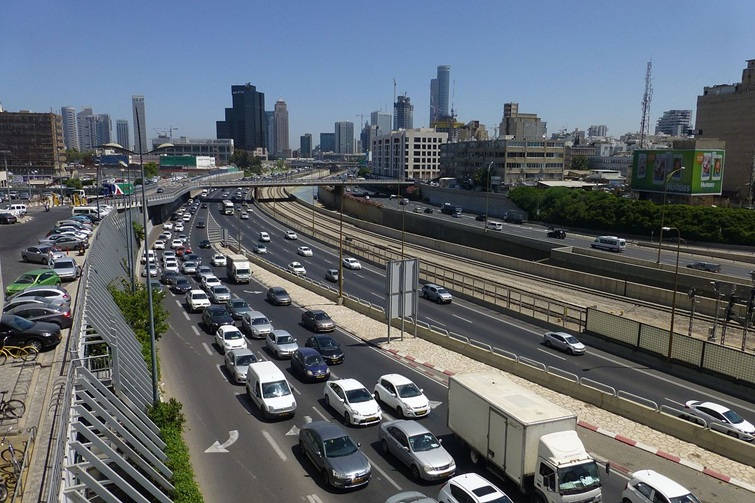
Israel has an extensive public transportation system that includes trains, intercity buses, urban buses, light rail, bus rapid transit, and several smaller local services.
Public transportation is usually the most economical way to travel, especially for solo travelers and visitors moving between major cities. However, it requires more planning when traveling with heavy luggage, visiting rural attractions, or traveling on Shabbat.
Traveling by Train
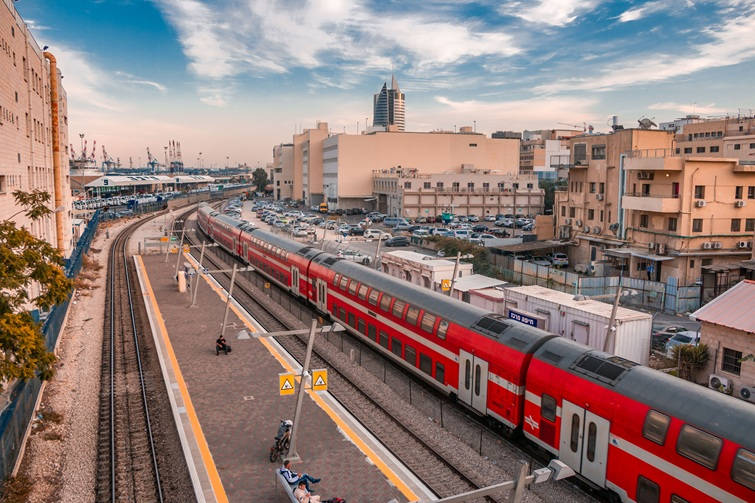
Israel Railways connects Ben Gurion Airport with Tel Aviv, Jerusalem, Haifa, Be’er Sheva, Nahariya, Akko, Netanya, Ashdod, and many other destinations.
Trains are especially useful for traveling from:
- Ben Gurion Airport to Tel Aviv, Jerusalem, Haifa, and Be’er Sheva
- Tel Aviv to Jerusalem, Haifa, and Be’er Sheva
- Haifa to Akko or Nahariya
The railway is generally comfortable, air-conditioned, and easier to use with luggage than most buses. Major stations normally have elevators or escalators, although moving through large stations can still take time.
Train schedules may change because of engineering work, holidays, special events, or security-related disruptions. Always check the Israel Railways journey planner shortly before traveling rather than relying on a timetable from an older blog post.
💡 My Tip: Allow additional time when changing trains. Platforms can be far apart, and some connections require walking through a large station or passing through another security check.
Traveling by Bus
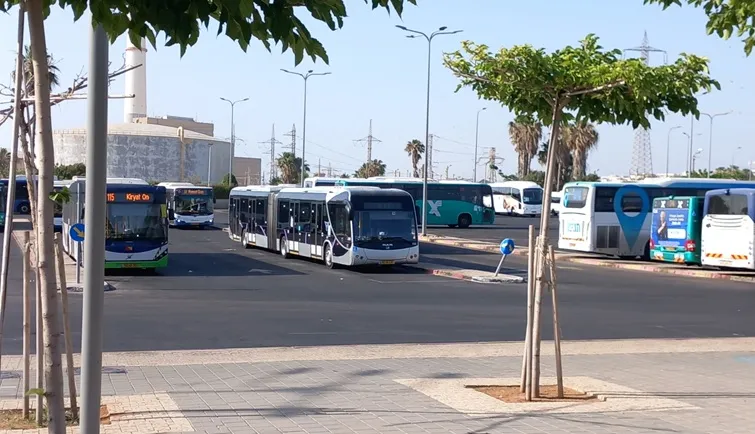
Buses provide broader geographic coverage than trains and serve almost every city as well as many smaller towns.
They are often the only practical public transportation option for destinations such as:
- Tiberias and the Sea of Galilee
- Nazareth
- Safed
- Ein Gedi and Ein Bokek
- Masada
- Eilat
- Smaller communities and regional towns
However, reaching rural attractions, hiking areas, national parks, monasteries, and archaeological sites may require multiple buses, a long walk from the nearest stop, or a final taxi connection.
Intercity buses normally depart from central bus stations or major roadside terminals. Urban bus stops display route numbers, but English information can be limited, so a navigation app is particularly useful.
💡 My Tip: When planning a bus journey to a rural attraction, check the return trip as carefully as the outbound journey. Service may become infrequent in the afternoon, and the last bus can depart earlier than expected.
Light Rail and Urban Transit
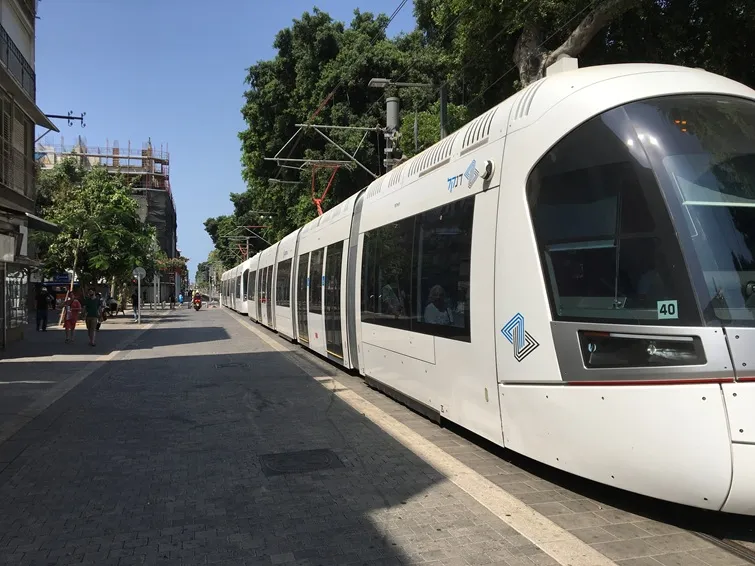
Jerusalem and the Tel Aviv metropolitan area have light-rail systems that serve important urban corridors.
In Jerusalem, the light rail is useful for reaching areas near the Old City, Mahane Yehuda Market, the city center, and several residential districts.
The Tel Aviv Red Line connects parts of Tel Aviv, Jaffa, Ramat Gan, Bnei Brak, and Petah Tikva. It is useful for certain cross-city journeys, although many hotels and attractions still require a walk, bus connection, or taxi from the nearest station.
Haifa has several distinctive public transportation systems, including the Metronit bus rapid transit network and the Carmelit underground funicular. These can be convenient within the city, but Haifa’s steep terrain means that two places appearing close together on a map may be separated by a considerable climb.
How to Pay for Public Transportation
The most widely used payment methods are:
- A physical Rav-Kav smart card
- An approved mobile payment application
- Contactless credit-card payment on supported services
- A paper ticket purchased at a railway station, where available
Approved mobile payment apps currently include Moovit, Rav-Pass by HopOn, Pango, EGG, and Cello. Fares are generally calculated according to the journey and applicable public transportation rules.
A Rav-Kav card must be loaded before boarding. Cash payments and onboard Rav-Kav reloading are not available on regular buses.
Visitors can normally use an anonymous Rav-Kav card without providing Israeli identification. Mobile apps may be more convenient, but they require a working phone, mobile data, registration, and a compatible payment method.
💡 My Tip: Even when planning to pay by phone, an anonymous Rav-Kav card can be a useful backup in case your battery dies, the app does not accept your card, or mobile reception is poor.
Can You Pay Cash on Buses and Trains?
You cannot normally pay cash directly to a bus driver.
At railway stations, travelers can purchase tickets from ticket machines or staffed counters where available. Payment options may vary by machine and station.
Planning Public Transportation Journeys
Useful tools include:
- The official Israel Railways journey planner
- The National Public Transportation Authority website
- Moovit
- Google Maps
- Operator-specific websites or apps
Real-time apps are useful, but they are not infallible. Temporary diversions, road closures, security incidents, holiday schedules, and construction work may not appear immediately. For an important connection, compare the app information with the official operator’s schedule.
3. Taxis and Taxi Apps in Israel
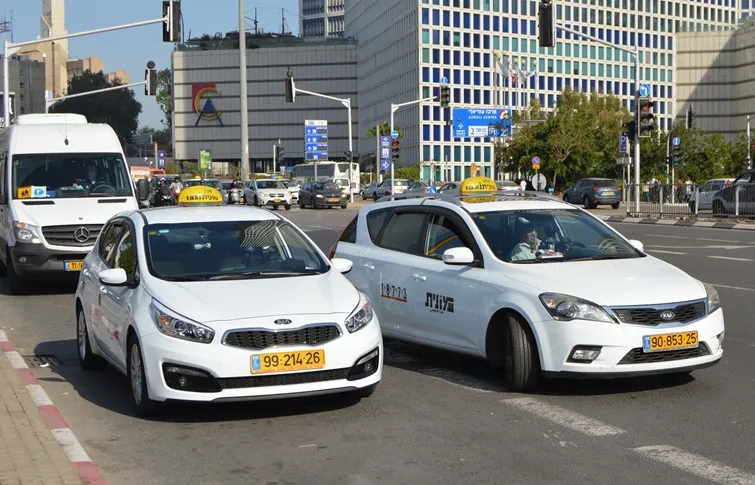
Taxis are widely available and are especially useful for short urban journeys, when traveling with luggage, for getting from a train or bus station to a hotel, for early-morning departures, and for reaching destinations that are not well served by public transportation. They are also a practical option during Shabbat and holidays, as well as for travelers with limited mobility.
Licensed Israeli taxis are usually white and display an illuminated taxi sign and identifying information. Taxi drivers are required to operate a meter for regulated taxi journeys. Reports of drivers refusing to use the meter or demanding excessive prices are among the reasons travelers should use licensed taxis and retain their receipts.
A pre-booked private transfer with an agreed price is different from taking a regular metered taxi. When booking any fixed-price transportation, confirm what is included before travel.
👉 For everything you need to know about using taxis in Israel, including fares, tipping, common mistakes to avoid, and practical tips for travelers, see my complete guide to taxis in Israel.
Taxi Apps in Israel
Gett and Yango are the best-known and widely used taxi apps in Israel. They allow passengers to request a licensed taxi, follow the driver’s arrival, and often pay through the app.
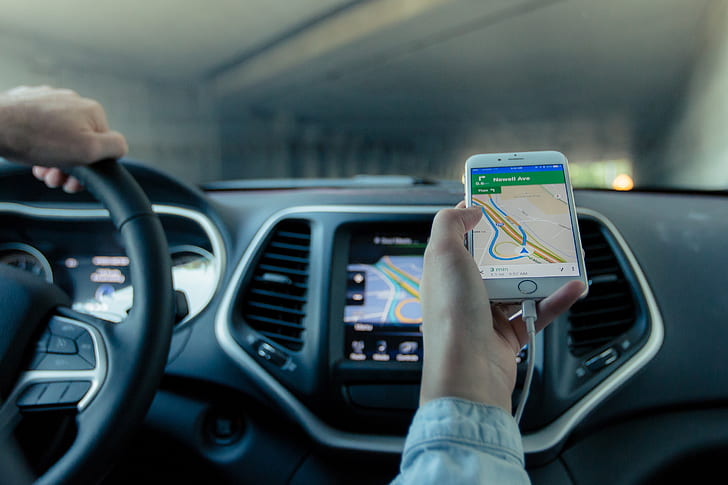
App-based booking can be particularly useful when you do not speak Hebrew because your pickup point and destination are entered digitally.
However, an estimated app price is not always the same as a guaranteed final fare. Additional booking charges, waiting time, traffic, or applicable tariff periods may affect the total.
Is Uber Available in Israel?
As of July 2026, Uber and Lyft do not operate in Israel as standard ride-sharing platforms connecting passengers with private drivers.
👉 For more details, alternatives, and valuable tips, see my full guide: Is Uber Available in Israel?
A sherut, or monit sherut, is a shared minibus or van operating along a fixed or semi-fixed route.
Sherut services traditionally filled the gap between buses and private taxis. Some routes may operate later than regular buses or during parts of Shabbat, but the network is much smaller and less predictable than it once was.
Travelers should keep several limitations in mind:
- Routes may not appear clearly in English-language planners.
- Timetables can be informal or difficult to confirm.
- The vehicle may depart only after enough passengers arrive.
- Luggage space can be limited.
- Some routes mentioned in older travel guides no longer operate.
- Payment is commonly made directly to the driver.
A sherut can still be useful when a current route matches your journey, but it should not be your only plan for an important airport transfer or time-sensitive connection.
👉 For more information about sherut services in Israel, see my guide: Are Shared Taxis Still Available in Israel?
5. Private Transfers and Pre-Booked Transportation
A private transfer offers direct transportation from your pickup point to your destination without transfers, station changes, or waiting for other passengers.
It is particularly useful for:
- Arrivals at Ben Gurion Airport
- Shabbat and Jewish holidays
- Families with children
- Groups sharing the cost
- Travelers carrying several suitcases
- Older visitors or passengers with limited mobility
- Early flights and late-night arrivals
- Hotels far from train or bus stations
- Long intercity journeys
With a pre-booked airport transfer, the driver can monitor the flight, meet you at the terminal, assist with luggage, and take you directly to your accommodation.
Before booking, confirm:
- The total price
- The number of passengers
- The amount and size of luggage
- The vehicle category
- Whether child seats are required
- The meeting point
- Waiting-time conditions
- The cancellation policy
- Whether tolls or additional stops are included
Private transportation can also be arranged for intercity journeys, multiple stops, business travel, cruise-port transfers, and customized itineraries. You can view transparent rates for popular destinations on my Airport Transfers page and Private Day Trips page.
💡 My Tip: For two or three travelers with luggage, compare the total cost of separate train, bus, and taxi connections with the price of one direct transfer. The difference may be smaller than expected, particularly late at night or on Shabbat.

6. Renting a Car and Driving in Israel
Renting a car gives you the greatest independence and can be the best option for itineraries that include rural destinations or several stops in one day.
When Renting a Car Makes Sense
A rental car is especially useful for exploring:
- The Sea of Galilee
- The Golan Heights
- The Upper Galilee
- Rural Christian and biblical sites
- Caesarea and the northern coast
- The Dead Sea
- Masada and Ein Gedi
- The Negev Desert
- Mitzpe Ramon
- National parks and nature reserves
- Smaller towns with limited public transportation
When You May Not Need a Car
A rental car is often unnecessary if your itinerary is concentrated in:
- Central Tel Aviv
- Jerusalem
- Haifa
- A small number of cities connected by train
- Organized day trips with transportation included
Driving and parking in central Tel Aviv or Jerusalem can be stressful. Parking spaces are limited, enforcement is strict, and some streets have restricted access or dedicated public transportation lanes. In many cases, it is easier to travel between Jerusalem and Tel Aviv by train and use walking, light rail, buses, or taxis within each city.
Most Israeli rental agreements include territorial restrictions. Many rental vehicles may not be taken into areas administered by the Palestinian Authority, including Bethlehem. Review the agreement carefully and ask the rental company about every destination on your itinerary.
If a rental car suits your itinerary, compare current offers through DiscoverCars before choosing a provider and insurance package.
💡 My Tip: Do not collect a rental car simply because you are spending one day outside a city. For a single excursion, an organized tour or private day trip may be easier once parking, insurance, tolls, fuel, and navigation are considered.
7. Getting Around Israel’s Main Cities
Transportation within each Israeli city is different. A method that works well in Tel Aviv may be less suitable in Jerusalem or Haifa.
Getting Around Jerusalem
Jerusalem’s main tourist areas are best explored through a combination of walking, light rail, urban buses, taxis, and organized or private transportation for outlying sites.
Walking is the best way to explore the Old City, but its stone streets, stairways, slopes, and crowds can be challenging for travelers with limited mobility.
The light rail is useful for traveling between the city center, Mahane Yehuda Market, areas near the Old City, and several outer districts.
A taxi can be useful for reaching the Mount of Olives, Yad Vashem, the Israel Museum, the German Colony, and hotels located away from the light-rail corridor.
👉 Planning your visit to Jerusalem? Discover the city’s top attractions, best areas to explore, practical travel tips, and recommended day trips in my complete Jerusalem Travel Guide.

Getting Around Tel Aviv
Tel Aviv is flatter and more walkable than Jerusalem, with many beaches, markets, restaurants, and central neighborhoods located close together.
Urban buses provide extensive coverage, while the Red Line light rail serves several important corridors. Taxis and taxi apps are widely available for direct journeys, and bicycles or electric scooters can be convenient for shorter trips where designated lanes are available.
For shorter journeys, bicycles and electric scooters are popular choices, especially along the city’s bike-friendly routes. Riders are expected to use designated lanes where available and remain attentive to pedestrians, traffic conditions, and local regulations.
👉 For a complete overview of walking, buses, light rail, bicycles, scooters, taxis, and weekend transportation, explore Getting Around Tel Aviv.
Getting Around Haifa
Haifa is built across the slopes of Mount Carmel, making its geography more challenging than it first appears.
Transportation options include a range of public and private services such as urban buses, the Metronit bus rapid transit network, the Carmelit underground funicular, Israel Railways connections, taxis, and a cable-car system that serves selected areas of the city. Together, these options help residents and visitors navigate the steep terrain and connect different parts of the city efficiently.
Because of the steep terrain, a taxi or bus may be worthwhile even for a short distance. Check the elevation as well as the distance when planning a walking route.

Getting Around Tiberias and the Sea of Galilee
Central Tiberias is relatively compact, but many important attractions around the Sea of Galilee are spread across the region.
Buses serve several towns and attractions, but coordinating multiple biblical sites in one day can be difficult without a car, organized tour, or private driver.
A rental car or private day trip is often the most efficient choice for visiting places such as Capernaum, Tabgha, the Mount of Beatitudes, Magdala, Yardenit, and Nazareth.
Getting Around Eilat
Central Eilat can be explored using local buses, taxis, and walking. A rental car may be helpful for visiting Timna Park, the Red Canyon, desert viewpoints, or destinations outside the hotel area.
Israel Railways does not currently reach Eilat. Travelers generally reach Eilat by intercity bus, rental car, private transportation, or a domestic flight to Ramon Airport when flights are operating.

8. Traveling on Shabbat and Jewish Holidays
Shabbat begins before sunset on Friday and ends after nightfall on Saturday. Exact times change throughout the year.
Israel Railways and most regular public bus and light-rail services stop before Shabbat begins and resume gradually after it ends. Major Jewish holidays can create similar transportation limitations.
Available alternatives are taxis, private transfers, limited municipal weekend routes, selected sherut services, and hotel-arranged transportation.
Do not assume that public transportation resumes immediately at the moment Shabbat ends. Services restart gradually, and the first departure may be later in the evening.
Plan your transportation in Israel carefully and especially from Friday evening through Saturday.
💡 My Tip: Before finalizing your itinerary, check the calendar for Shabbat, Jewish holidays, holiday eves, and memorial days. A journey that is simple on Thursday may require a completely different plan on Friday evening or Saturday.
9. Day Trips, Tours, and Regional Transportation
Some of Israel’s most important attractions are outside the main cities and can be difficult to combine using public transportation in a single day.
Public transportation is usually the least expensive option, but it may substantially reduce the amount of time available at each destination. A rental car offers independence, although the driver must manage navigation, parking, traffic, and the return journey. An organized tour is convenient for major attractions but follows a fixed schedule. A private day trip offers the greatest flexibility and can be adjusted according to your interests, mobility, pickup point, and preferred pace.
While planning your trip, you may find these guides helpful:
- How to Get from Jerusalem to the Dead Sea
- How to Get from Jerusalem to Bethlehem
- The Best Day Trips from Tel Aviv
- The Best Day Trips from Jerusalem
- Private Day Trips in Israel
- Shore Excursions from Haifa Port
- Shore Excursions from Ashdod Port
When comparing tours, check whether the price includes transportation, entrance fees, a licensed guide, meals, hotel pickup, and return transportation.

10. Practical Travel Tips for Getting Around Israel
- Download Essential Apps Before Arrival: Install the transportation apps you expect to use before your trip. Complete the registration process and add your payment method while you still have reliable internet access.
- Stay Connected: An Israeli eSIM or local data plan can be particularly helpful for navigation, ride booking, ticket validation, and receiving messages from drivers.
- Verify Schedules: Transportation schedules can change due to Shabbat and holidays, road closures, public events, demonstrations, security restrictions, severe weather, and temporary route changes. Because of this, it is not advisable to rely solely on screenshots or schedules saved several days in advance.
- Allow Extra Time at Stations: Israeli railway and bus stations may have security checks at the entrance. Large stations can also require several minutes to reach the correct platform. Build extra time into airport connections and other journeys that cannot be missed.
- Avoid Tight Connections: A five-minute connection may look possible in an app but leave no margin for delays, platform changes, elevators, ticket gates, or finding the correct bus stop.
- Plan Around Rush Hour: Traffic is usually busiest on weekday mornings and late afternoons, particularly around Tel Aviv, Jerusalem, and the main coastal highways. Sunday mornings can also be especially busy.
- Confirm Payment Before Entering a Taxi: Some taxis accept credit cards, while others may prefer cash unless the ride is booked through an app. Confirm before departure to avoid difficulty at the end of the journey.
- Reserve the Correct Vehicle Size: A standard sedan may not fit four passengers and four large suitcases. Provide an accurate luggage count when booking a private transfer or larger taxi.
- Check Accessibility in Advance: Many trains, buses, stations, and light-rail services are accessible, but conditions vary by route and location. Travelers who require step-free access, wheelchair space, assistance, or an adapted vehicle should confirm arrangements before travel rather than relying solely on general accessibility information.
Frequently Asked Questions
Choosing the Right Transportation for Your Trip
There is no single transportation method that works best for every journey in Israel.
Trains are usually the most efficient way to travel between major cities. Buses extend the network to destinations not served by rail. Taxis and private transfers provide flexibility when public transportation is unavailable or inconvenient, while rental cars are particularly valuable for rural regions and multi-stop itineraries.
The most successful travel plans combine these options according to the destination and day of the week. Use public transportation where it is convenient, arrange direct transportation when luggage or timing makes connections difficult, and consider a rental car or private day trip when exploring areas beyond the main urban network.
Most importantly, check your travel dates carefully. Shabbat, Jewish holidays, temporary service changes, and local conditions can significantly affect transportation.
With the right preparation, getting around Israel can be straightforward, efficient, and an enjoyable part of your journey.
Prefer to Arrange Your Transportation in Advance?
I provide private airport transfers, door-to-door transportation throughout Israel, customized private day trips, and shore excursions from Haifa and Ashdod ports, with pickup details and pricing confirmed in advance.
Complete the request form below with your travel date, pickup location, destination, number of passengers, and luggage requirements to receive a personalized quote.

Thank you for visiting my website!
I’m Moshe Barak, providing private transportation across Israel for international travelers for over 20 years.
Together with my team of dedicated drivers, I offer reliable, flexible, and personalized service – with close attention to detail and a personal touch. Whether you’re visiting for business or leisure, I’m committed to making your journey as easy and enjoyable as possible.
Feel free to reach out for a quote, I’ll be happy to assist.
I look forward to being part of your journey in Israel.
Warm regards,
Moshe Barak

One Last Thing…
✈️ Travel Insurance for Your Trip to Israel
Unexpected medical costs, flight changes, or lost baggage can quickly turn a great trip into a stressful one. Travel insurance helps you stay protected and enjoy Israel with peace of mind. Consider these two trusted, well-reviewed insurance providers:
Discover More of Israel
Travel guides, destination ideas, and practical tips to help you plan your trip

Best Hotels in Haifa

Best eSIM for Israel
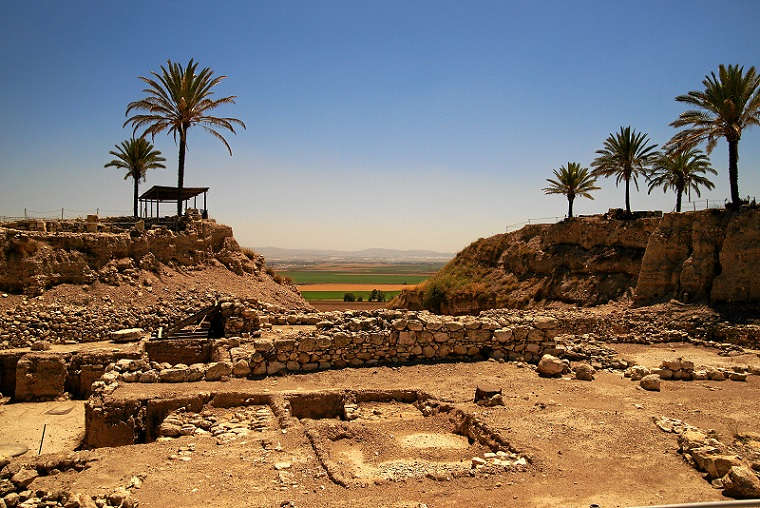
Tel Megiddo (Armageddon)

The Best Beaches in Tel Aviv

Ein Gedi

The Old City of Jerusalem

Best Day Trips from Jerusalem
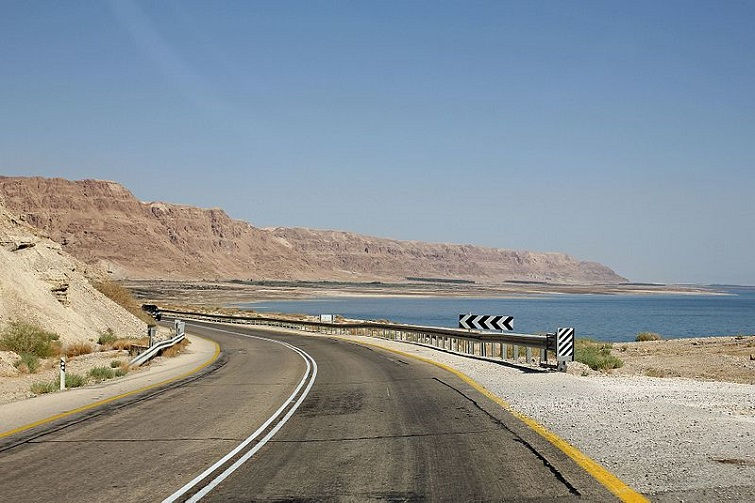
How to Get from Jerusalem to the Dead Sea

Mitzpe Ramon Crater
Eilat

Where to Stay in Jerusalem