Getting Around Tel Aviv
A Practical Guide to Transportation for Tourists
Last updated: August 2026 by Moshe Barak — Israel travel and transportation expert with more than 20 years of experience helping international travelers navigate Israel.
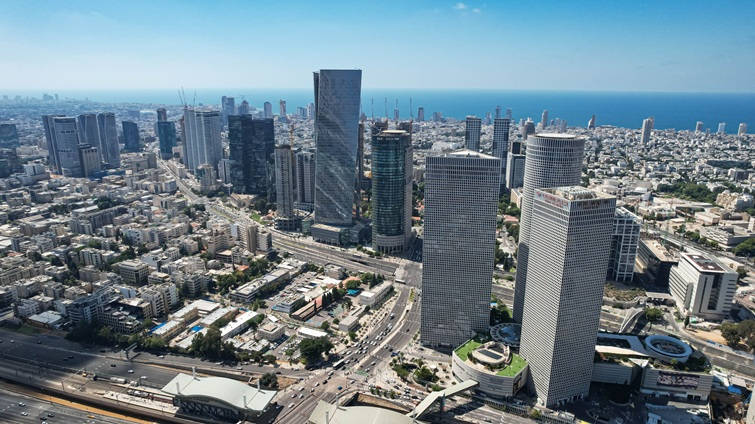
Tel Aviv is one of the easiest cities in Israel to explore without a car. Many beaches, markets, restaurants, shopping streets, museums, and central neighborhoods are close enough to reach on foot, while buses and the Red Line make longer journeys relatively straightforward.
Taxis are useful when traveling with luggage, returning late at night, or getting around during Shabbat. Israel Railways is mainly useful for reaching Ben Gurion Airport and destinations outside Tel Aviv rather than for sightseeing within the city.
For most visitors, the best strategy is to combine walking, public transportation, and occasional taxis, with bicycles or electric scooters providing another useful option for shorter journeys.
This guide explains how each option works, how to pay for public transportation, which apps are useful, what changes on Shabbat, and what international travelers should know before getting around Tel Aviv.
Quick Answer: Walk whenever your destinations are reasonably close, use buses for the widest coverage, take the Red Line when it follows your route, and use taxis for luggage, late-night journeys, Shabbat, or trips without a convenient public-transport connection. Most tourists do not need a rental car while staying in central Tel Aviv.
💡 Just so you know: Some links on this page are affiliate links, meaning I may earn a small commission if you make a purchase or booking, at no extra cost to you. This helps me keep this site running – thank you!
Getting Around Tel Aviv at a Glance
| Option | Best For | Typical Cost | Regular Shabbat Service? | Main Limitation |
|---|---|---|---|---|
| Walking | Beaches and central neighborhoods | Free | Yes | Heat and longer distances |
| Bus | Most parts of Tel Aviv | From ₪8 | No | Traffic and route changes |
| Red Line | Destinations along its corridor | From ₪8 | No | Does not cover every tourist area |
| Israel Railways | Airport and intercity travel | Distance-based | No | Stations are east of the beachfront |
| Taxi | Direct travel, luggage and late nights | Metered | Yes | More expensive |
| Naim B’sofash | Selected weekend routes | Free | Yes | Smaller network than weekday buses |
| Sherut | Fixed central corridors | Separate fare | Some routes | Less predictable |
| Bike or Scooter | Short and medium journeys | Operator-dependent | Yes | Best for confident riders |
| Rental Car | Trips outside Tel Aviv | Variable | Yes | Traffic and difficult parking |
A standard public-transport journey of up to 15 km currently costs ₪8. Eligible journeys paid with Rav-Kav or an authorized mobile-payment app can include transfers within 90 minutes of the first validation.
Fares, routes, and schedules can change, particularly during holidays, construction work, and temporary service disruptions. Check a live transportation app on the day you travel.
What Is the Best Way to Get Around Tel Aviv?
There is no single best transportation option for every journey.
Walking is usually the easiest choice around the beachfront, Dizengoff, Carmel Market, Kerem HaTeimanim, Rothschild Boulevard, Neve Tzedek, Florentin, and Jaffa.
Buses provide the broadest coverage and are useful for areas that are too far to walk or not conveniently served by the Red Line.
The Red Line can be particularly efficient when both your starting point and destination are close to one of its stations.
Taxis work well for direct journeys, luggage, late nights, and Shabbat.
Israel Railways is mainly useful when you are heading to the airport or leaving Tel Aviv for another city.
A rental car is rarely worthwhile for sightseeing within central Tel Aviv.
👉 My Tip: Where you stay can make a bigger difference. If you have not chosen your accommodation yet, compare the best areas to stay in Tel Aviv to find the neighborhood that best matches your plans and reduce unnecessary travel across the city.
How to Pay for Public Transportation in Tel Aviv
Understanding payment before your first journey makes using Tel Aviv’s buses and light rail considerably easier.
For tourists, the main options are:
- A Rav-Kav travel card
- An authorized mobile-payment app
- Contactless credit-card or mobile-wallet payment on buses
Cash should not be relied upon for regular buses or the Red Line.
Rav-Kav
Rav-Kav is Israel’s reusable public-transport smart card. It can be used on buses, the Red Line, Israel Railways, and other public transportation throughout the country.
Tourists can purchase an anonymous Rav-Kav and load money or a suitable travel product onto it.
Cards can be loaded at service points and compatible machines or through an NFC-enabled smartphone using services such as Rav-Kav Online or Rav-Pass.
One important point often confuses first-time visitors:
Loading money onto your Rav-Kav does not pay for your journey.
You still need to validate the card whenever you travel.
Paying with a Transportation App
Instead of using a physical Rav-Kav, visitors can pay through an authorized public-transport app.
Current approved mobile-payment options include services such as:
- Moovit
- Rav-Pass
- Pango
- Cello
- egg
When using an app, you must activate or validate each individual journey according to the instructions shown in the app. That includes transfers made during the 90-minute transfer period.
Mobile payment is convenient, but it depends on having:
- Mobile data
- Enough battery power
- A working payment method
- A properly registered app
If you plan to rely heavily on your phone, arrange mobile data before you start traveling. My guide to the best eSIM options for Israel explains the main choices for visitors.
Paying Directly by Credit Card on Buses
Supported contactless bank cards and mobile wallets can now be used directly on buses. Tel Aviv Municipality specifically lists credit-card and Apple Pay payment among the available bus options.
This can be very convenient if you only plan to take an occasional bus.
There is an important disadvantage, however: direct credit-card payment is charged separately for each journey and does not include the 90-minute transfer benefit, personal discounts, or travel passes.
If you expect to use buses frequently or make connections, a Rav-Kav or authorized payment app is generally the better choice.
💡 Important: Always validate or activate your journey correctly. Ticket inspectors regularly check public transportation, and simply having money loaded on a Rav-Kav is not proof that you paid for the current trip.
Walking in Tel Aviv
Walking is often the simplest and most enjoyable way to explore central Tel Aviv.
The city is relatively flat, and many tourist areas connect naturally with one another. You can often spend several hours sightseeing without needing transportation at all.
Good areas to combine on foot include:
- Dizengoff Square, Rabin Square, and the surrounding city center
- Carmel Market, Nahalat Binyamin, and Kerem HaTeimanim
- Rothschild Boulevard and Neve Tzedek
- Florentin and Levinsky Market
- The beachfront and central promenade
- Jaffa Flea Market, Old Jaffa, and Jaffa Port
Jaffa is particularly well suited to walking once you arrive. The Flea Market, Clock Tower, Old Jaffa, Artists’ Quarter, port, and waterfront are all close enough to explore without transportation. If you plan to spend several hours there, see my complete guide to visiting Jaffa for the main sights, markets, walking areas, restaurants, and practical tips.
Walking Along the Beach
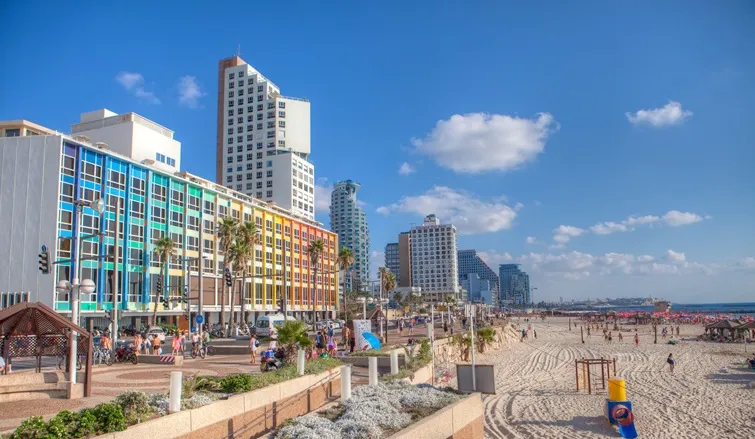
Tel Aviv’s beachfront promenade is one of the easiest parts of the city to explore on foot. It continues along the coastline through Tel Aviv and Jaffa, with coastal paths extending farther north and south.
It is particularly useful for moving between beaches because you avoid most major roads and can simply follow the Mediterranean coastline.
If beach time will be an important part of your visit, my guide to the best beaches in Tel Aviv explains the differences between the main beaches and who each one suits best.
Walking in Summer
Summer days can be hot and humid, particularly during July and August.
Longer walks are more comfortable in the morning or toward evening. Carry water, use sun protection, and remember that the beachfront offers considerably less shade than some tree-lined streets and boulevards.
Also watch carefully when crossing bicycle lanes. Some run directly beside sidewalks and bus stops, and bicycles or electric scooters can approach quickly from either direction.
Using Buses in Tel Aviv
Buses provide the most extensive public-transport coverage in Tel Aviv.
They are useful for reaching places such as:
- The beachfront
- Jaffa
- Tel Aviv Port
- Yarkon Park
- Northern Tel Aviv
- Florentin
- Railway stations
- Residential neighborhoods
- Museums and attractions away from the central tourist area
Several operators serve Tel Aviv, but tourists normally do not need to know which company operates each route.
Instead, enter your destination into Moovit or Google Maps and follow the suggested journey.
A standard journey of up to 15 km currently costs ₪8.
Practical Tips for Using Tel Aviv Buses
- Check that you are waiting on the correct side of the street.
- Validate or pay immediately after boarding.
- Press the stop button before your destination.
- Follow your progress on your phone if you are unfamiliar with the area.
- Allow additional time during rush hour.
- Recheck the route on the day of travel because construction can temporarily relocate stops.
- Avoid large luggage on crowded city buses where possible.
What Time Do Buses Stop?
Most regular bus services stop before Shabbat begins on Friday and resume after Shabbat ends on Saturday evening.
Exact final and first departures vary according to the route and time of year.
There are also selected Night Lines during late-night periods. Their operating days and frequency can vary, so use a live journey planner rather than assuming that a particular night bus runs every night.
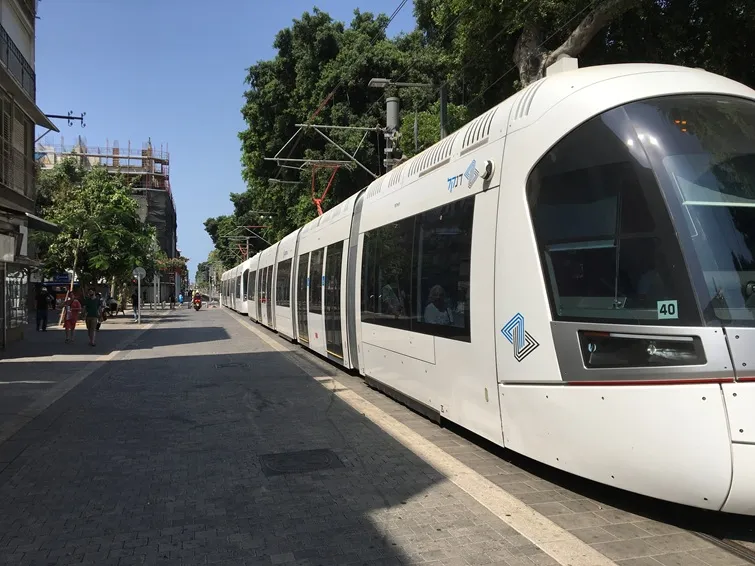
Using the Tel Aviv Red Line
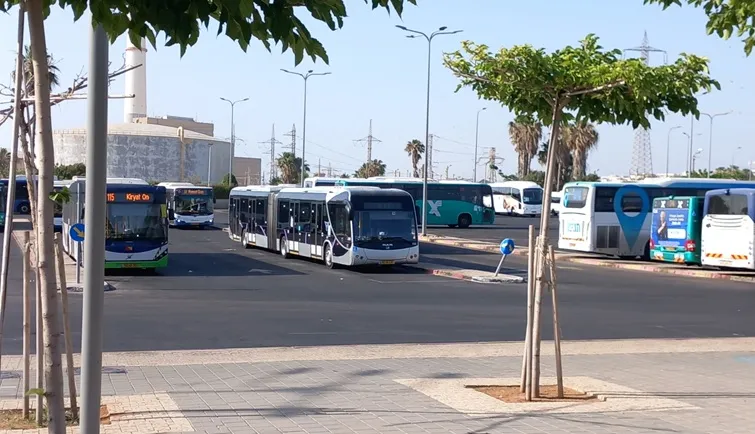
The Red Line is currently the only operating light-rail line serving the Tel Aviv metropolitan area (as of August 2026).
It connects Petah Tikva, Bnei Brak, Ramat Gan, Tel Aviv-Yafo, and Bat Yam, with 34 stations along the full route. Ten stations are underground.
Within Tel Aviv, the Red Line is particularly useful when your destination lies close to its corridor.
However, it is important to understand what it does not cover.
The line does not directly serve most beachfront hotels, the Tel Aviv Port, or much of the northern tourist area around Dizengoff. Depending on the trip, a bus may still provide the easier route.
Useful Red Line Stations for Visitors
| Station | Useful For |
|---|---|
| Arlozorov | Savidor Center railway station and northern central Tel Aviv |
| Sha’ul HaMelekh | Tel Aviv Museum area and nearby cultural institutions |
| Yehudit | Sarona and eastern central Tel Aviv |
| Carlebach | TLV Mall and Begin Road |
| Allenby | Allenby Street and Rothschild Boulevard |
| Elifelet | Southern Neve Tzedek and northern Florentin |
| Shalma | Jerusalem Boulevard and northern Jaffa |
| Bloomfield Stadium | Bloomfield Stadium and surrounding parts of Jaffa |
Sha’ul HaMelekh is particularly useful for the Tel Aviv Museum of Art and the surrounding cultural district. If museums are part of your itinerary, my guide to the best museums in Tel Aviv covers the city’s main art, history, culture, and specialist museums.
Allenby Station can be useful for central Tel Aviv, but it is not directly at Carmel Market. Always check the remaining walking distance before choosing the light rail.
Paying on the Red Line
Use a validated Rav-Kav or an authorized mobile-payment app and follow the instructions for the type of station you are entering.
A standard journey within the first distance band currently costs ₪8.
The Red Line does not operate during Shabbat.
What About the Green and Purple Lines?
You may see extensive construction throughout Tel Aviv connected with additional light-rail lines.
Do not plan your trip around lines shown on future transit maps unless they are officially operating at the time of your visit. For now, the Red Line is the relevant light-rail service for tourists.
When Is Israel Railways Useful in Tel Aviv?
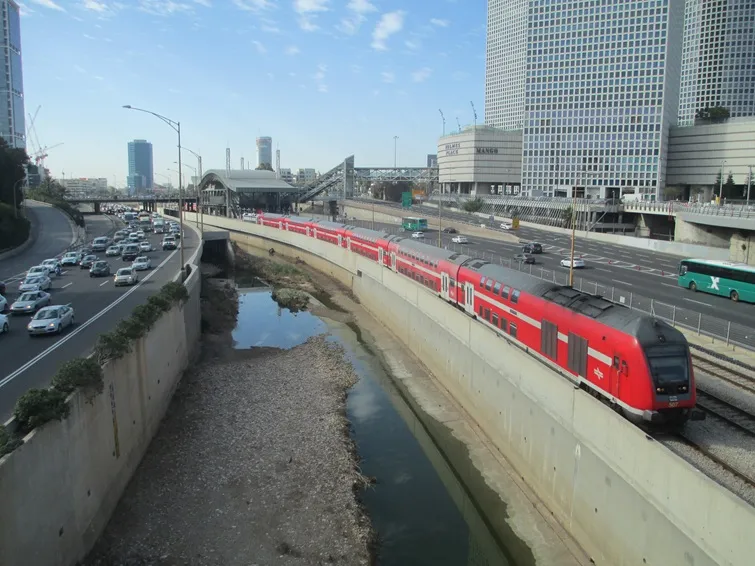
Israel Railways is much more useful for getting into or out of Tel Aviv than for traveling between its main tourist neighborhoods.
It is one of the best public-transport options for destinations such as:
- Ben Gurion Airport
- Jerusalem
- Haifa
- Acre
- Beer Sheva
- Other cities on the national railway network
Tel Aviv has four main railway stations:
| Station | Most Useful For |
|---|---|
| Tel Aviv University | Tel Aviv University, Expo Tel Aviv, and northern Yarkon Park |
| Savidor Center | Arlozorov and northern central Tel Aviv |
| HaShalom | Azrieli Center, Sarona, and the central business district |
| HaHagana | Southern Tel Aviv and airport connections |
All four railway stations are located along the Ayalon corridor, east of Tel Aviv’s main beachfront area.
That means Israel Railways is generally not the best way to travel between places such as the beach, Carmel Market, Neve Tzedek, Jaffa, Dizengoff Square, and Tel Aviv Port.
Check the Israel Railways journey planner shortly before departure because schedules and engineering works can change.
Regular trains do not operate during Shabbat.
Taxis and Taxi Apps in Tel Aviv
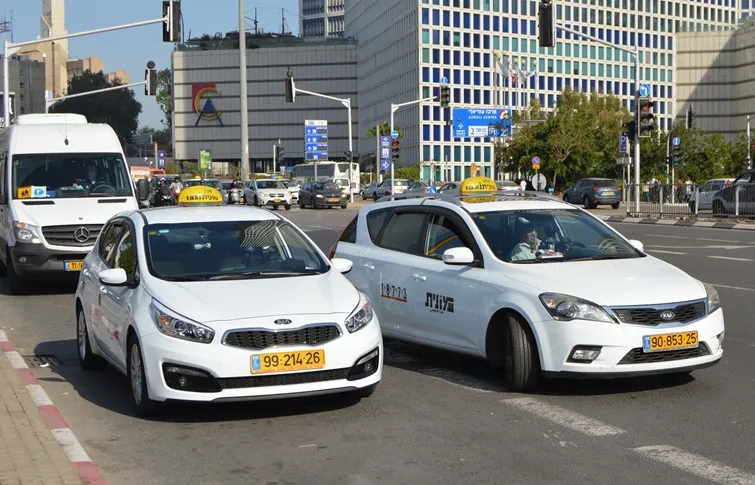
Taxis are widely available throughout Tel Aviv and are particularly useful when public transportation would require an inconvenient connection.
A taxi often makes sense when:
- You have luggage
- You are traveling late at night
- You are traveling during Shabbat
- You need to reach an exact address
- Several people are sharing the journey
- You have limited mobility
- The public-transport route requires several changes
Licensed taxis can be hailed on the street or ordered through an app.
Gett is the best-known taxi-booking app in Israel, while Yango is another option used locally.
Using an app can make things easier for international visitors because you can see the driver’s details, follow the vehicle on a map, keep a record of the journey, and use available in-app payment options.
For ordinary street taxis, Israeli taxi fares are regulated and the meter should normally be used. If an app displays a price before booking, check whether it is a confirmed fare or only an estimate.
Taxis continue operating during Shabbat and Jewish holidays, although higher tariff periods can apply.
Tipping taxi drivers in Israel is optional.
👉 For more detail about meters, tariffs, payment methods, taxi apps, and avoiding common mistakes, see my complete guide to taxis in Israel.
👉 Visitors should also know that Uber does not currently provide its conventional private-driver ride-sharing service in Israel. My guide to Uber in Israel explains what is available instead.
Using a Sherut in Tel Aviv
A sherut is a shared service taxi, usually a minibus, operating along a fixed route.
Unlike a regular taxi, passengers share the vehicle with other people traveling along the same corridor.
Some Tel Aviv sherut services operate during Shabbat, which makes them especially useful when regular buses are not running.
Two of the best-known city routes broadly follow the corridors of bus routes 4 and 5, covering parts of central Tel Aviv such as Allenby, Ben Yehuda, Rothschild Boulevard, Dizengoff Center, and Dizengoff Street.
Sherut is generally easiest to use when you already know that the route follows the street you need.
Compared with a regular bus:
- Timetables are less predictable.
- Vehicles may fill up.
- Payment is handled separately from normal public transport.
- Routes can be less obvious to first-time visitors.
- Large luggage can be inconvenient.
💡 For more background, see my guide to sherut transportation in Israel.
Bicycles and Electric Scooters
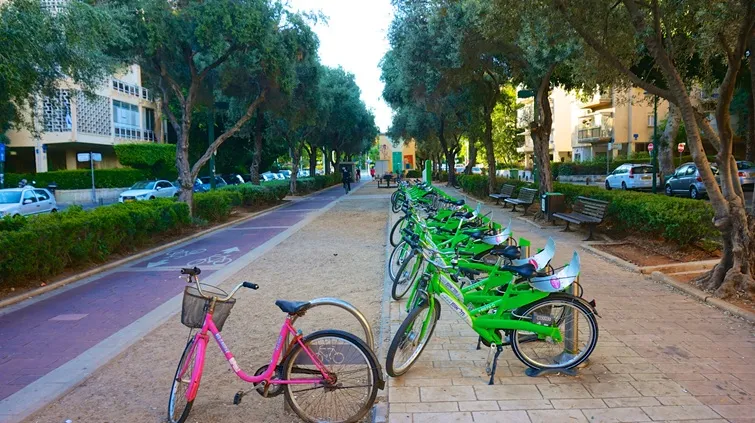
Bicycles and electric scooters are a genuine transportation option in Tel Aviv, not simply a tourist attraction.
The city’s flat terrain and expanding bicycle-lane network make them particularly practical for short and medium-distance journeys.
They work especially well for routes such as:
- Along the beachfront
- Rothschild Boulevard
- Between Neve Tzedek and central Tel Aviv
- Between central Tel Aviv and Jaffa
- Short trips between neighborhoods
- Connecting a railway or light-rail station with your final destination
Shared Electric Scooters
The main shared-mobility brands you are currently likely to encounter include Lime, Bird, and Dott.
The basic process is similar between operators:
- Download the operator’s app.
- Create an account and add a payment method.
- Find an available vehicle on the in-app map.
- Scan the QR code to unlock it.
- Ride within the permitted service area.
- Park in an approved location.
- End the ride through the app.
Pricing can include an unlocking fee, a per-minute charge, ride passes, or promotional packages.
Because prices and promotions change, check the app immediately before starting the ride rather than relying on a price quoted in an older travel article.
Vehicle availability also changes constantly. For tourists, the best operator is often simply the one with a suitable vehicle nearby and a permitted parking area close to the destination.
Downloading more than one operator app gives you greater flexibility.
Shared E-Bikes and Regular Bicycle Rentals
Depending on the current fleets available around the city, you may also find shared electric bicycles through mobility operators.
For a longer ride, a traditional bicycle or e-bike rental shop can be a better option than paying by the minute.
A half-day or full-day rental makes particular sense if you plan to:
- Ride along a long section of the beachfront
- Explore Yarkon Park
- Cycle between central Tel Aviv and Jaffa
- Spend several hours making multiple stops
Where Is Cycling Most Enjoyable?
The beachfront is one of the easiest areas for visitors because long stretches have dedicated cycling infrastructure and the route is straightforward.
It can also be an enjoyable way to travel between several of the best beaches in Tel Aviv without repeatedly waiting for buses or taking taxis.
Rothschild Boulevard and other central bike corridors can also be useful, although intersections and urban traffic require more attention.
Rules Tourists Need to Know
Israeli traffic rules apply to electric bicycles and scooters, and Tel Aviv actively enforces them.
Important rules include:
- Motorized bicycle and scooter riding is permitted from age 16 subject to the applicable legal eligibility requirements.
- Use designated bicycle lanes where available.
- Where no bicycle lane exists, follow the applicable road rules.
- Riding on ordinary pedestrian sidewalks is prohibited.
- Helmets are mandatory for electric bicycle and scooter riders.
- Electric bicycles are limited to 25 km/h.
- Carrying another passenger on an electric scooter is prohibited.
- Using a phone while riding is prohibited.
- Wearing headphones while riding is prohibited.
- Pedestrians have priority at crossings.
- At an ordinary pedestrian crossing, dismount rather than riding across unless a designated cyclist crossing is provided.
The municipality lists fines for violations including sidewalk riding, riding without a helmet, phone use, and running red lights.
💡 My Tip: Don’t simply follow the shortest route on your map. If you are unfamiliar with Tel Aviv traffic, a slightly longer journey that stays on protected bicycle lanes is usually a much better choice.
Scooters and bicycles are less practical with substantial luggage, young children, or if you are uncomfortable riding beside urban traffic. For confident riders, however, they can be one of the fastest ways to cover short distances in Tel Aviv.
Getting Around Tel Aviv on Shabbat
Shabbat is one of the most important transportation issues for international visitors to understand.
Regular trains, the Red Line, and most ordinary bus services stop before Shabbat begins on Friday and resume after it ends on Saturday evening.
Exact times change throughout the year because Shabbat begins and ends according to sunset.
Tel Aviv, however, has more weekend transportation options than most Israeli cities.
Naim B’sofash Weekend Transportation
Naim B’sofash is a municipal transportation network operating on Fridays and Saturdays when the regular public-transport system is largely unavailable.
The service currently connects Tel Aviv with several surrounding municipalities and serves many areas that are useful to visitors. It is free to passengers.
Typical operating hours are approximately:
- Friday: 5:00 p.m. – 2:00 a.m
- Saturday: 9:30 a.m. – 6:00 p.m
Many routes operate approximately every 30 minutes, although schedules vary and may be different on holidays.
Useful destinations served by the broader network include areas around:
- Tel Aviv beaches
- Jaffa
- Rothschild Boulevard
- Dizengoff
- Tel Aviv Port
- Yarkon Park
- Tel Aviv University
- Florentin
- HaBima
- Tel Aviv Museum
Do not assume that your regular weekday bus route has an identical weekend replacement. Check the Naim B’sofash route that actually serves your destination.
Other Ways to Travel on Shabbat
Visitors can also use:
- Licensed taxis
- Selected sherut routes
- Shared bicycles and electric scooters
- Walking
- Pre-booked private transportation
👉 If you need to reach or leave Ben Gurion Airport during Shabbat, there are additional considerations and limited weekend options. See my guide to traveling from Ben Gurion Airport on Shabbat before relying on your normal weekday plan.
Driving and Parking in Tel Aviv
For most tourists, renting a car specifically to get around central Tel Aviv creates more inconvenience than it solves.
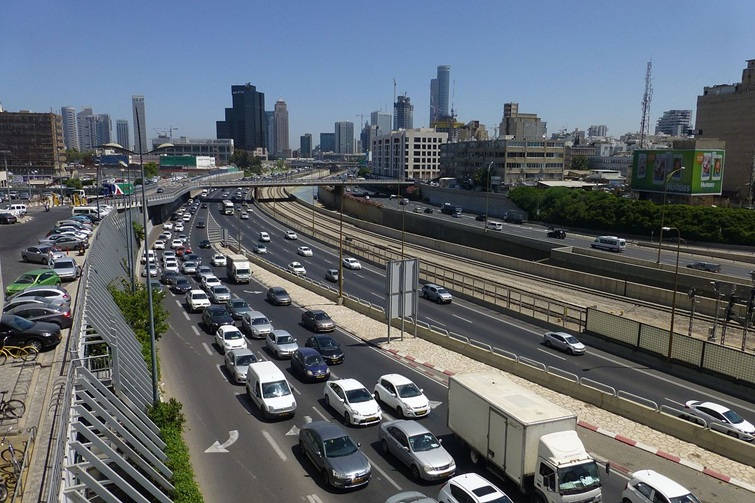
Traffic can be heavy, many streets are one-way, construction can affect routes, and finding legal parking near popular areas may take time.
Understanding Street Parking
Blue-and-white curb markings generally indicate regulated parking, but the road sign determines the actual rules.
Restrictions can vary according to:
- Street
- Time of day
- Day of the week
- Parking zone
- Resident-permit requirements
Some spaces that visitors can use during the daytime become resident-only later in the day.
Tel Aviv Municipality specifically advises drivers to follow the street signage even where it differs from general parking rules.
Pango and Cello are commonly used for regulated parking.
Commercial parking garages can be easier for tourists who only need to park for several hours.
Should You Rent a Car in Tel Aviv?
Usually not.
If you are spending several days sightseeing in Tel Aviv, it often makes more sense to explore the city without a car and collect your rental vehicle only when you are ready to leave.
A car becomes much more useful if you plan to travel independently to destinations that have limited public transportation.
Before deciding whether you actually need one, look through my guide to the best day trips from Tel Aviv. Some destinations work well by train, bus, organized tour, or private day trip, while others are significantly easier with your own vehicle.
Car-sharing services also exist, but registration, driving-license approval, parking rules, and unfamiliar local traffic generally make them less attractive for short-term international visitors than simply using taxis or renting a car when needed.
If a rental car fits your wider itinerary, compare available vehicles and rates before arrival.
👉 For transportation beyond Tel Aviv, my complete guide to getting around Israel compares trains, buses, taxis, rental cars, and private transportation throughout the country.
Getting from Ben Gurion Airport to Tel Aviv
Ben Gurion Airport is outside Tel Aviv, but reaching the city is straightforward when regular transportation is operating.
The main options are:
- Train: Usually the fastest and least expensive option when trains are running. It connects Terminal 3 with Tel Aviv’s four railway stations.
- Bus 445: Useful for travelers whose accommodation is close to its route through central Tel Aviv and the beachfront area.
- Official airport taxi: Direct transportation from the airport to your hotel or apartment.
- Private transfer: Door-to-door transportation arranged before arrival, particularly useful for families, groups, substantial luggage, or arrivals when public transport is unavailable.
There is no regular traditional sherut service from Ben Gurion Airport to Tel Aviv. Train and normal bus service are also suspended during the main Shabbat period.
👉 For current fares, journey times, airport station locations, Bus 445 stops, taxi information, Shabbat alternatives, and help choosing the best option for your hotel, see my complete guide to getting from Ben Gurion Airport to Tel Aviv.
Accessible Transportation in Tel Aviv
Much of Tel Aviv’s public-transport system is designed to accommodate passengers with reduced mobility.
Many city buses have low-floor access, ramps, and designated wheelchair spaces.
The Red Line includes accessible stations and vehicles, with elevators and wider access gates at underground stations.
Travelers who depend on an elevator should check current station information before an important journey because temporary equipment outages can affect which entrance is usable.
The Naim B’sofash network also provides accessibility arrangements, although passengers requiring specific assistance should check the current service instructions before traveling.
Traveling outside the busiest commuting hours can make journeys easier for:
- Wheelchair users
- Travelers with walking difficulties
- Parents with strollers
- Passengers carrying substantial luggage
If you require a specially adapted taxi or private vehicle, arrange it in advance rather than assuming an accessible vehicle will be immediately available on the street.
Best Apps for Getting Around Tel Aviv
You do not need to install every transportation app available in Israel.
A few well-chosen apps cover almost everything most visitors need.
Moovit
Probably the most useful all-round public-transport app.
Use it for:
- Bus routes
- Red Line journeys
- Live arrival estimates
- Stop information
- Route changes
- Mobile public-transport payment
Google Maps
Particularly useful for:
- Walking
- Comparing different routes
- Finding attractions and businesses
- Basic public-transport planning
Israel Railways
Useful if you plan to take trains to:
- Ben Gurion Airport
- Jerusalem
- Haifa
- Other cities
Gett and Yango
Useful for ordering licensed taxis without having to find one on the street.
Lime, Bird and Dott
Install one or more of these if you intend to use shared electric scooters or other available shared-mobility vehicles. Current availability should always be checked in the individual apps.
Rav-Kav Online
Useful primarily for loading and managing a physical Rav-Kav on a compatible NFC-enabled smartphone.
Pango and Cello
Useful for public-transport payment and, particularly if you are driving, regulated street parking.
💡 My Tip: Download the apps you expect to use and complete registration before you actually need them. Discovering that an app will not accept your payment method when you are already standing at a bus stop or beside a scooter is unnecessarily frustrating.
Practical Tips for Getting Around Tel Aviv
Check Live Information
Construction and temporary road changes frequently affect bus stops and traffic routes.
Use a live journey planner rather than relying on directions saved several days earlier.
Plan Friday Journeys in Advance
If you are traveling on Friday, check when your final regular bus, train, or Red Line service departs.
Do not wait until late afternoon to work out how you will get back to your hotel or travel to another city.
Validate Every Journey
Having money loaded onto a Rav-Kav is not enough.
Validate the card whenever required, or activate the journey correctly through your payment app.
Check the Entire Door-to-Door Route
A train or Red Line journey may look fast on paper but still leave you with a substantial walk or another connection.
Compare the complete trip rather than only the time spent on the train.
Allow Extra Time During Rush Hour
Road congestion can considerably increase journey times for:
- Buses
- Taxis
- Private transfers
- Rental cars
The Red Line’s underground section and Israel Railways are generally less affected by road traffic.
Save Your Accommodation Address
Keep the full hotel or apartment address saved on your phone, preferably together with a map pin.
This is particularly useful when taking a taxi or sherut.
Carry a Backup Payment Method
Even if you normally use your phone, carry a physical bank card.
A flat battery, mobile-data problem, or failed app login should not leave you without a way to travel.
Group Nearby Attractions Together
Tel Aviv is relatively compact, but repeatedly crossing the city wastes time.
Group attractions by area whenever possible. For example:
- Explore Jaffa and the southern waterfront together.
- Combine Neve Tzedek, Rothschild Boulevard, and Carmel Market.
- Visit Tel Aviv Museum, Sarona, and nearby central attractions on the same day.
- Group Tel Aviv Port, Yarkon Park, and the Old North.
If you are still building your itinerary, my guide to the best attractions in Tel Aviv can help you decide which places deserve priority.
Frequently Asked Questions
Final Thoughts
Getting around Tel Aviv is relatively straightforward once you understand how the different transportation options fit together.
For most visitors, walking should be the first choice for nearby attractions, buses provide the best overall city coverage, and the Red Line is useful whenever your route follows its corridor.
Taxis fill the gaps, particularly with luggage, late at night, and during Shabbat, while bicycles and electric scooters can be an efficient alternative for shorter journeys.
Israel Railways is best suited to the airport and trips beyond Tel Aviv, and most tourists can postpone renting a car until they are ready to leave the city.
Above all, use live transportation information. Routes, schedules, roadworks, and shared-mobility availability can change, so checking your journey shortly before you leave is always better than relying on an old timetable or screenshot.
Once you understand the transportation system, Tel Aviv becomes much easier to plan: choose a convenient neighborhood, group nearby attractions together, and use the transportation option that makes the most sense for each individual journey.

Thank You for Visiting My Website
I’m Moshe Barak, and for over 20 years I’ve been providing private transportation services across Israel for international travelers.
Together with my team of dedicated drivers, I offer reliable, flexible, and personalized service, with close attention to every detail. Whether you’re visiting Israel for business or leisure, my goal is to make your journey as smooth, comfortable, and stress-free as possible.
Feel free to get in touch for a quote. I’ll be happy to assist with your travel plans and transportation needs.
I look forward to being part of your journey in Israel.
Warm regards,
Moshe Barak

Request Your Quote
Enter your trip details below to check availability and receive a personalized quote
Discover More of Israel
Travel guides, destination ideas, and practical tips to help you plan your trip

Baptism in The Jordan River

How to Get from Ben Gurion Airport to Haifa

Israel Itinerary – 3 Days

How to Get from Ben Gurion Airport to Jerusalem

Yardenit Baptismal Site

How to Travel from Ben Gurion Airport on Shabbat

Israel Itinerary – 10 Days

Israel’s Calendar of Events

Best Hotels in Haifa

Visiting Tabgha

A Day Trip to Nazareth and Sea of Galilee