Churches in Jerusalem
The Complete Visitor’s Guide
Last updated: February 2026 by Moshe Barak — Israel travel and transportation expert with more than 20 years of experience helping international travelers navigate Israel.
Exploring the Churches of Jerusalem
Jerusalem is one of the most sacred cities in Christianity, with sites connected to Jesus’ life, ministry, crucifixion, and resurrection. Pilgrims from around the world visit these churches, chapels, and sacred spaces, which offer a unique blend of spiritual significance, history, and stunning architecture.
Jerusalem’s sacred sites form natural clusters, making them ideal for 4-6 hour walking loops that minimize travel time. This guide prioritizes efficiency for pilgrims, with biblical connections and architectural highlights woven throughout, alongside a detailed, church-by-church overview and practical visiting tips to help you plan your route. Modest dress (shoulders and knees covered) is expected at most sites.
💡 Just so you know: Some links on this page are affiliate links, meaning I may earn a small commission if you make a purchase or booking, at no extra cost to you. This helps me keep this site running – thank you!
🧭 How to Use This Guide
- Half-day visit: Focus on churches and sites in the Old City.
- One full day: Start in the Old City, continue to Mount Zion and finish at the Mount of Olives.
- Two days: Add Ein Karem and consider other optional sites if time allows.
For longer walking routes, consider using taxis between distant locations to save time and energy. Early visits help avoid crowds, especially at busy sites like the Church of the Holy Sepulchre.
Opening hours vary by season, religious observance, and custodianship and may change without notice, so it’s best to check locally on the day of your visit.
💡Not sure where to base yourself in Jerusalem? Check out my guide Where to Stay in Jerusalem? for a full overview of the city’s neighborhoods, with tips on the best areas and types of accommodation.
Old City Churches
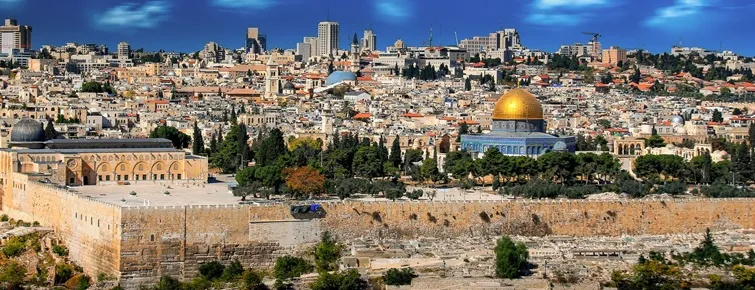
The Old City is the spiritual heart of Christian Jerusalem and home to several of its most sacred sites. All major churches are within walking distance, but the narrow alleys, crowds, and uneven stone streets make comfortable shoes essential. Vehicles are not allowed in most areas, so plan to explore on foot. Expect heavy foot traffic, especially near the Church of the Holy Sepulchre and along the Via Dolorosa, particularly during peak hours and religious events.
1. Church of the Holy Sepulchre
Denomination: Shared by Greek Orthodox, Roman Catholic, Armenian Apostolic, and others
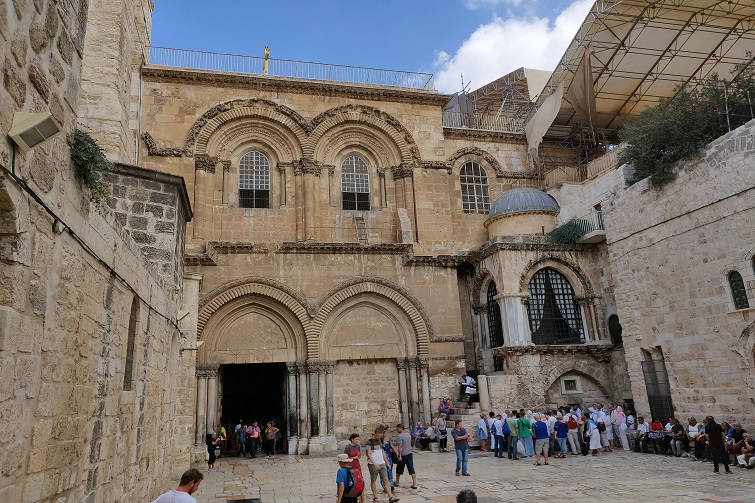
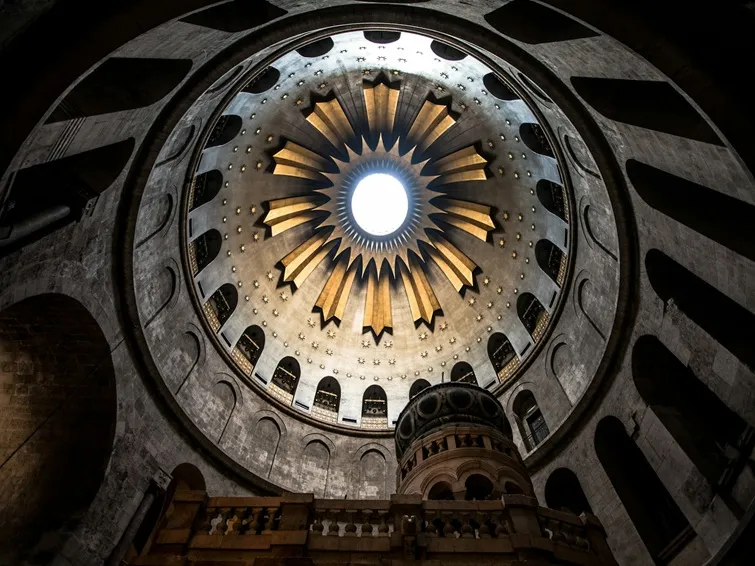
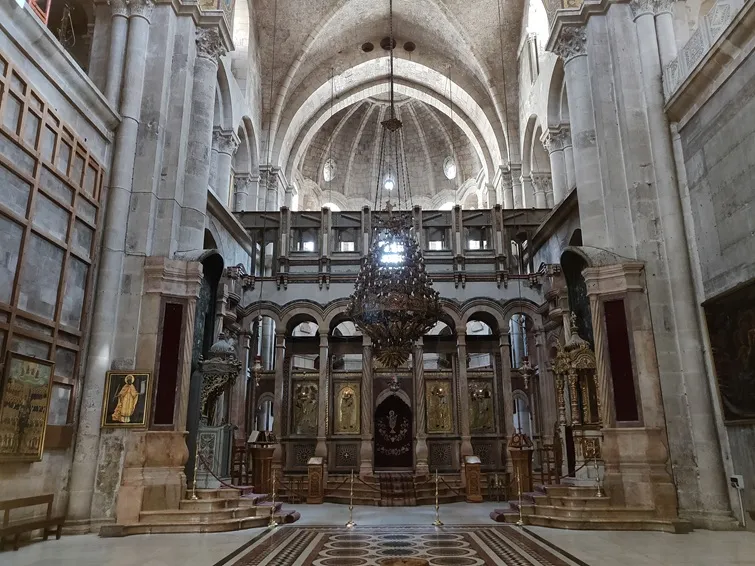
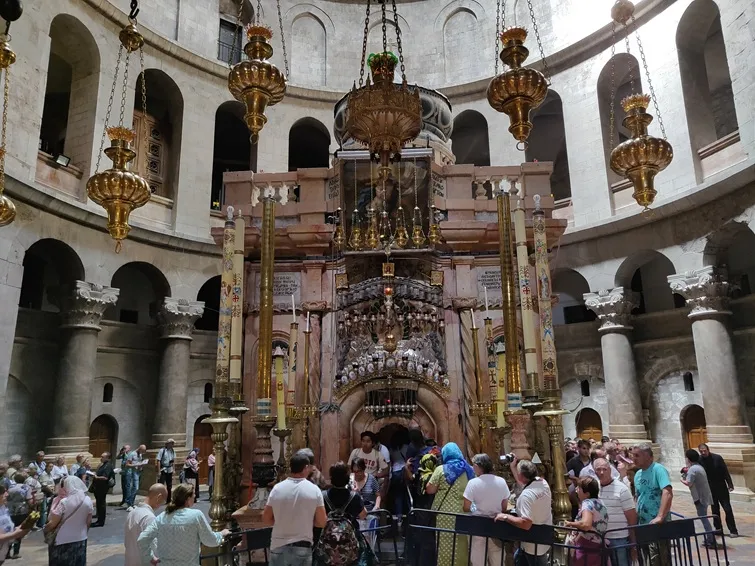
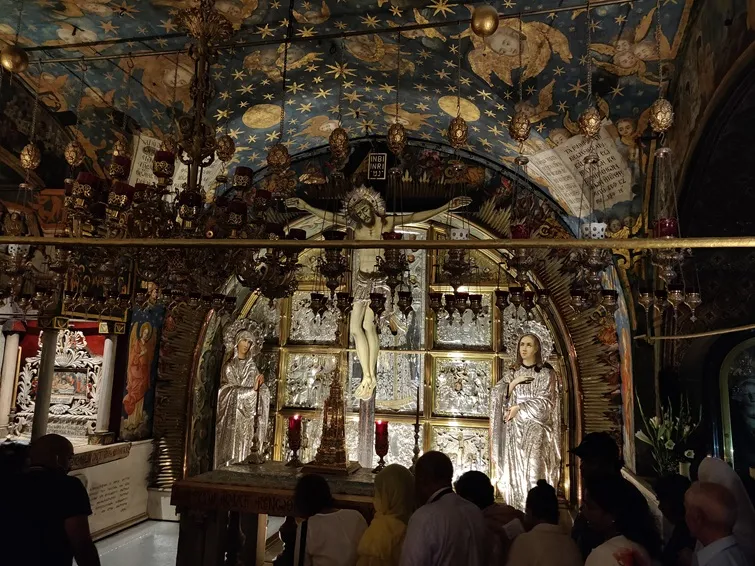
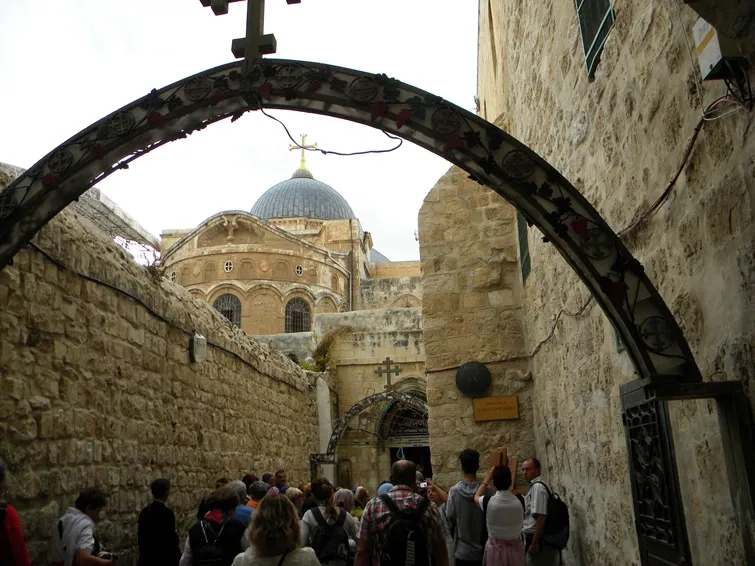
Believed to contain Golgotha (Calvary) and the tomb of Jesus, the Church of the Holy Sepulchre is the holiest site in Christianity and a centuries-old pilgrimage destination. Located in the Christian Quarter, this multi-level complex blends Byzantine, Crusader, and Ottoman architecture, featuring a rotunda over the Edicule (the Empty Tomb) and chapels representing multiple traditions. It is a must-visit for anyone exploring Jerusalem’s Christian heritage.
- Location: Christian Quarter, Old City of Jerusalem.
- Opening Hours & Entry: Open daily, from 5:00 AM to 8:00 PM (April-September) and from 4:00 AM to 7:00 PM (October-March). Entry is free.
💡 My Tip: The church can become very crowded, sometimes requiring waits of up to an hour. Visit as early as possible – especially during Easter, when crowds are particularly heavy. Consider a self-guided tour to explore the different denominational sections at your own pace.
2. Via Dolorosa
Denomination: Roman Catholic / Various Christian traditions
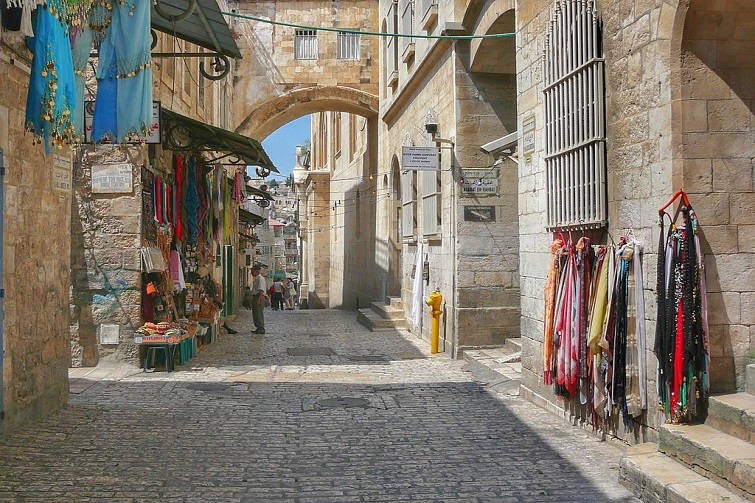
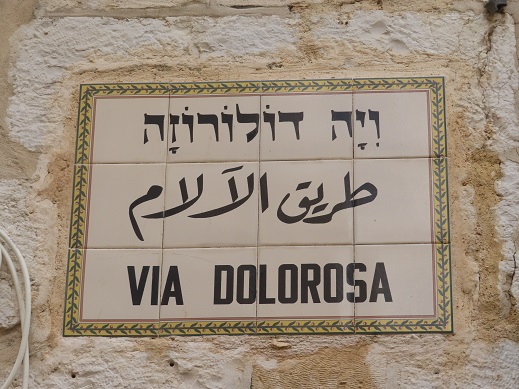
The Via Dolorosa is the traditional route Jesus walked carrying the cross, stretching about 600 meters from the Antonia Fortress (Pilate’s praetorium) through the Old City’s bustling souks to the Church of the Holy Sepulchre (John 19:17). Along the way, 14 Stations of the Cross are marked with chapels and simple plaques, commemorating key moments of the Passion. The narrow, arched alleyways feature Mamluk and Ottoman architecture, making the path both a spiritual pilgrimage and a journey through Jerusalem’s historic streets.
- Location: Starting from the Antonia Fortress (Muslim Quarter) to the Church of the Holy Sepulchre (Christian Quarter).
- Opening Hours & Entry: Always open (24/7) as a public route, but individual chapels along the way have their own hours.
💡 My Tip: Join a guided group tour or use a free audio guide app for a self-paced visit, exploring each Station along the Via Dolorosa at your own pace.
Other Churches in the Old City
The Old City is also home to several other notable churches worth visiting, each with its own history, denominational traditions, and architectural features that enrich a pilgrimage or walking tour of the Christian Quarter. These include:
- St. James Cathedral: The principal Armenian Apostolic church in Jerusalem, renowned for its ornate interior and historic Armenian heritage.
- Church of the Redeemer (Lutheran): A 19th-century Lutheran church featuring a tall bell tower with panoramic views of the Old City.
- Church of St. Alexander Nevsky (Russian Orthodox): A small Russian Orthodox church known for its distinctive onion domes and iconography.
- Church of the Flagellation: Midway along Via Dolorosa, commemorating Jesus’ scourging.
- Church of St. Anne (Roman Catholic): Famous for its remarkable acoustics and Crusader-era architecture, built on the traditional site of Mary’s birthplace.
Mount of Olives Churches
The Mount of Olives offers panoramic views of Jerusalem and hosts several major Christian pilgrimage sites connected to Jesus’ final days. The area involves moderate uphill and downhill walking, so allow extra time and water. Some locations are spread out, making this zone ideal for a half-day visit. Public transport and taxis are useful for reaching the upper sections.
1. Church of All Nations and Garden of Gethsemane
Denomination: Roman Catholic
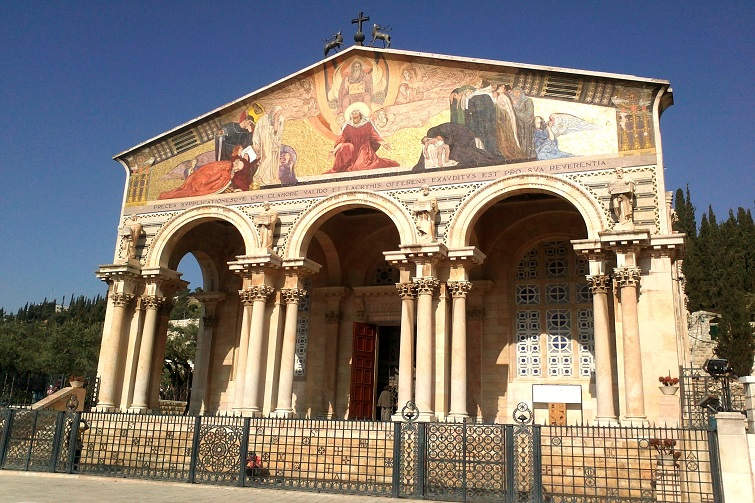
The Church of All Nations, at the base of the Mount of Olives, enshrines the “Rock of Agony,” where Jesus prayed on the night of His arrest (Matthew 26:36-46). Its dark blue ceiling with stars and purple-stained glass creates a permanent “nighttime” atmosphere for reflection, while mosaics inside symbolize unity in prayer. Outside, the Garden of Gethsemane preserves olive trees up to 2,000 years old around the rock. The site offers a profound blend of history, devotion, and natural beauty.
- Location: East of the Old City, at the base of the Mount of Olives, on Jericho Road
- Opening Hours & Entry: Open daily from 8:00 AM to 12:00 PM and 2:00 PM to 5:00 PM. Entry is free.
💡 My Tip: The site can get very crowded with tour buses by 10:00 AM. Visit early to enjoy quiet reflection in the Garden of Gethsemane.

2. Tomb of the Virgin Mary
Denomination: Greek Orthodox / Roman Catholic / Armenian Apostolic
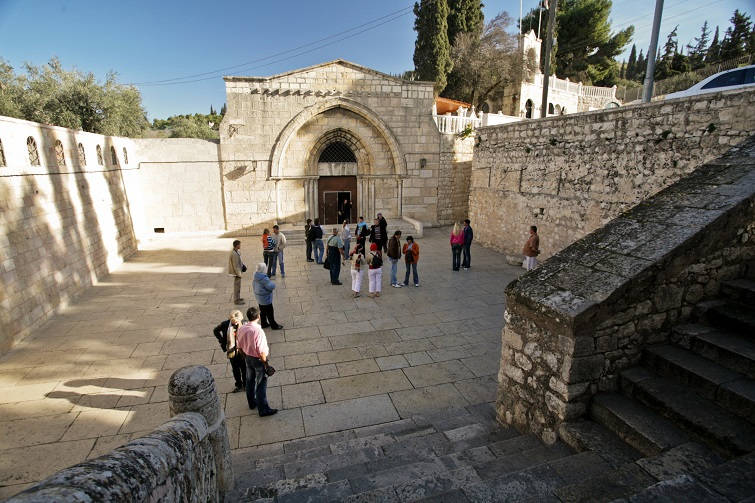
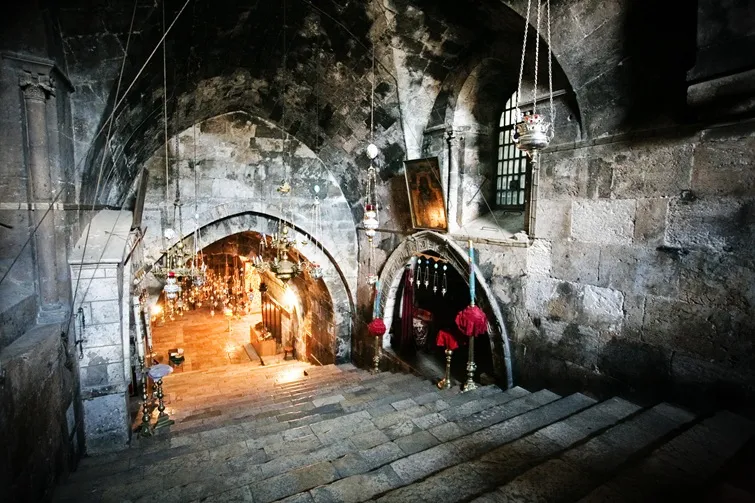
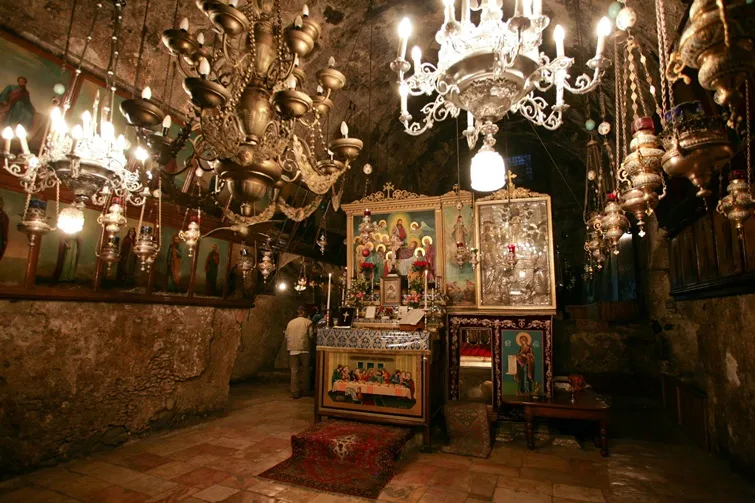
Located in the Kidron Valley at the foot of the Mount of Olives, the Tomb of the Virgin Mary is traditionally believed to be the site of her burial and assumption. Visitors descend a wide 12th-century stone staircase into a dim, incense-filled underground chamber, a unique Crusader-era grotto adorned with hundreds of silver and gold icons and hanging lamps. Byzantine architectural elements and devotional decorations create a solemn atmosphere for reflection and prayer.
- Location: Near the Garden of Gethsemane, at the foot of the Mount of Olives.
- Opening Hours & Entry: Open daily from 8:00 AM to 12:00 PM and 2:00 PM to 5:00 PM, free entry.
💡 My Tip: Because the site is deep underground, it stays cool even in the hottest summer days. Its location right next to the Garden of Gethsemane makes it easy to visit both sites at the same time.
3. Dominus Flevit Church
Denomination: Roman Catholic
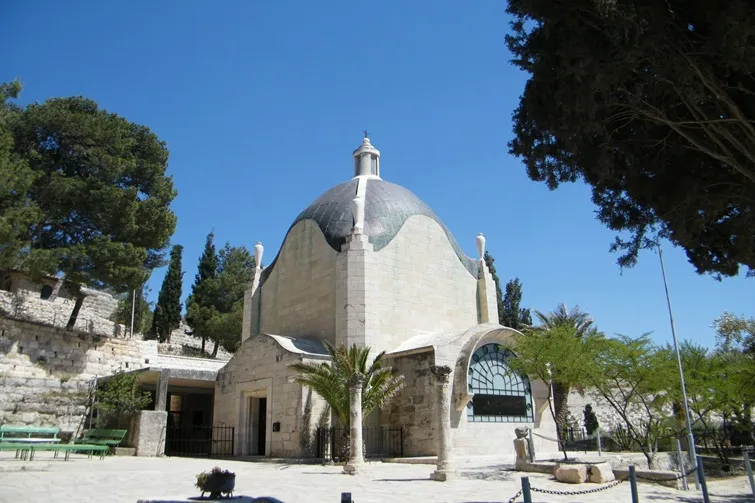
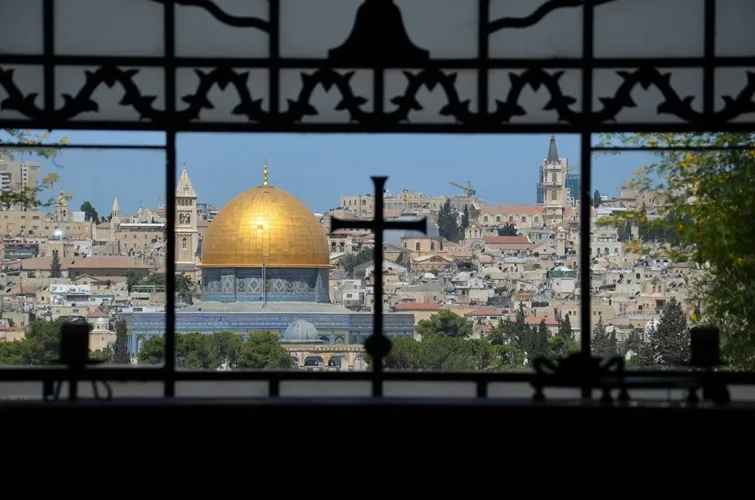
Commemorating Jesus weeping over Jerusalem (Luke 19:41-44), Dominus Flevit Church on the Mount of Olives is shaped like a teardrop and features stained-glass windows with panoramic views of the city. Its most famous window, behind the altar, perfectly frames the Dome of the Rock and the Old City walls, creating a contemplative setting for reflection.
- Location: Mount of Olives, overlooking the Kidron Valley and the Old City of Jerusalem
- Opening Hours & Entry: Open daily from 8:00 AM to 11:45 AM and 2:30 PM to 5:00 PM. Entry is free.
💡 Need to travel from the airport to Jerusalem? Check out my guide How to get from Ben Gurion Airport to Jerusalem for all your transportation options, tips, and up-to-date pricing.
4. Pater Noster Church
Denomination: Roman Catholic
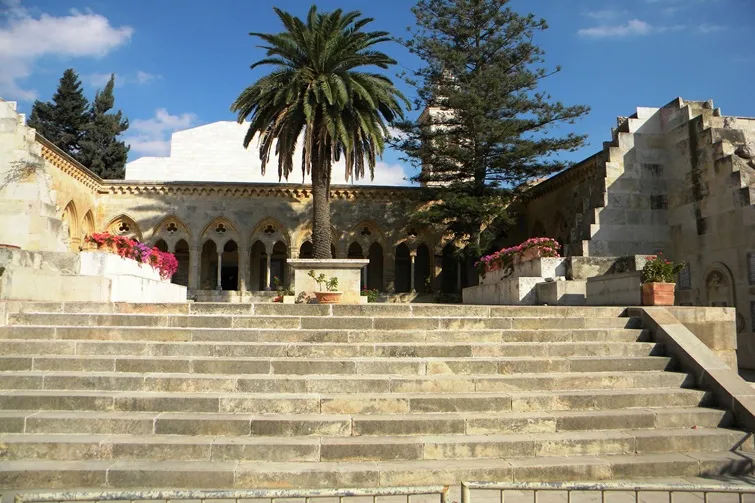
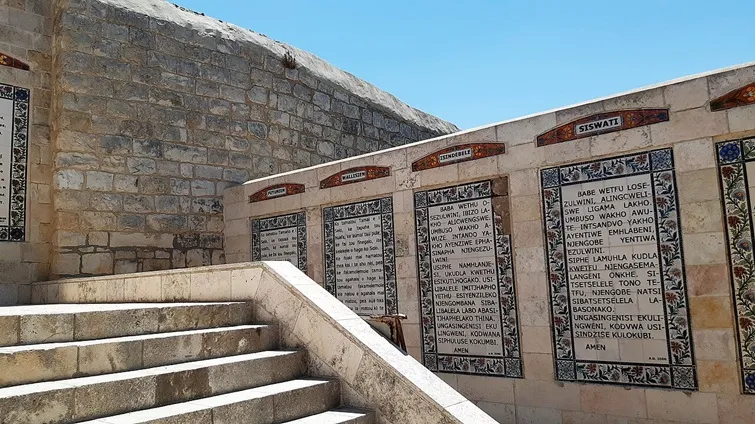
Built over a cave where Jesus taught His disciples the Lord’s Prayer (Luke 11:1), Pater Noster Church on the Mount of Olives is a symbolic site of devotion. Its most striking feature is the cloister walls, which display the “Our Father” prayer on colorful ceramic tiles in over 140 languages and dialects, making it a unique destination for reflection and pilgrimage.
- Location: Mount of Olives
- Opening Hours & Entry: Open Monday to Saturday from 8:30 AM to 12:00 PM and 2:30 PM to 4:30 PM. Entry fee is ~10-12 ILS.
💡 My Tip: Look for plaques in rare or ancient languages – it’s a powerful reminder of how far the Gospel has spread.
5. Church of Mary Magdalene
Denomination: Russian Orthodox
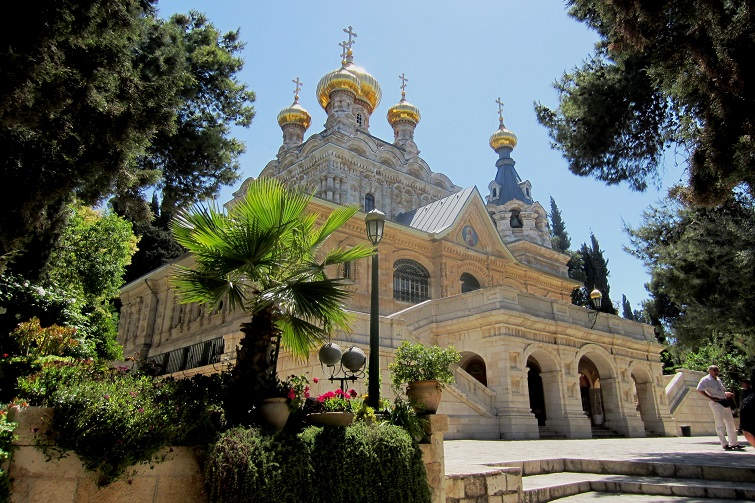
With its seven gleaming golden onion domes, the Church of Mary Magdalene is one of the most recognizable landmarks on the Mount of Olives. Built by Tsar Alexander III in memory of his mother, the interior features beautiful frescoes and an intricate iconostasis, and houses the relics of the martyr Grand Duchess Elizabeth. The church honors Mary Magdalene, a devoted follower of Jesus, and is a striking example of Russian Orthodox architecture.
- Location: Mount of Olives
- Opening Hours & Entry: Entry is free, but hours are very limited: Tuesdays and Thursdays only, 10:00 AM to 12:00 PM.
💡 My Tip: This church has a very strict dress code. Women must wear long skirts (scarves provided) and men must wear long pants.
6. Chapel of the Ascension
Denomination: Islamic jurisdiction (Open to all visitors).
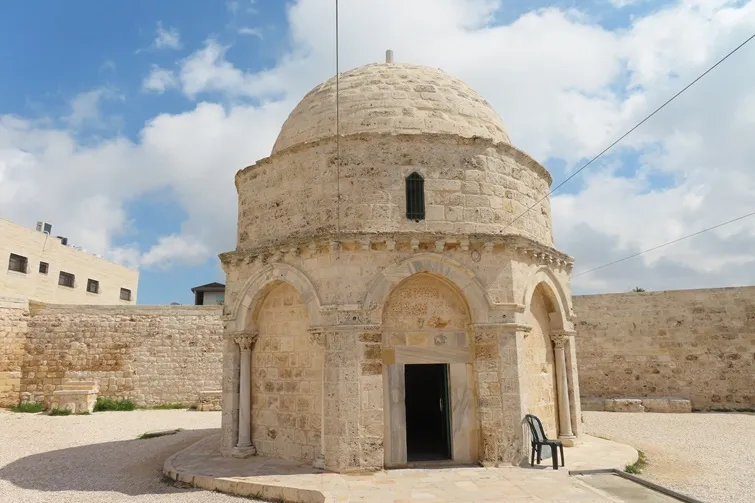
This small, octagonal Crusader-era chapel marks the spot where Jesus is believed to have ascended to Heaven 40 days after the Resurrection (Acts 1:9). Inside, a stone slab is preserved that tradition says bears the footprint of Jesus.
- Location: Mount of Olives
- Opening Hours & Entry: Open daily from 8:00 AM to 5:00 PM. Entry fee is ~10 ILS.
💡 My Tip: The chapel is located inside a walled courtyard. It is a very simple, humble site, but of immense significance for pilgrims.
Suggested Mount of Olives Route
The Christian sites on the Mount of Olives are naturally arranged along a descending route toward the Old City, making it easiest to start at the top and work your way down. Begin with the Chapel of the Ascension and Pater Noster Church, then visit Dominus Flevit and the Church of Mary Magdalene, followed by the Church of All Nations and the Garden of Gethsemane, and finish at the Tomb of the Virgin Mary. This sequence minimizes uphill walking and allows you to fully enjoy panoramic views and reflective moments along the way.
Mount Zion Churches & Churches Outside the Old City Walls
1. The Cenacle (Upper Room)
Denomination: Under Israeli Government jurisdiction (No specific denomination).
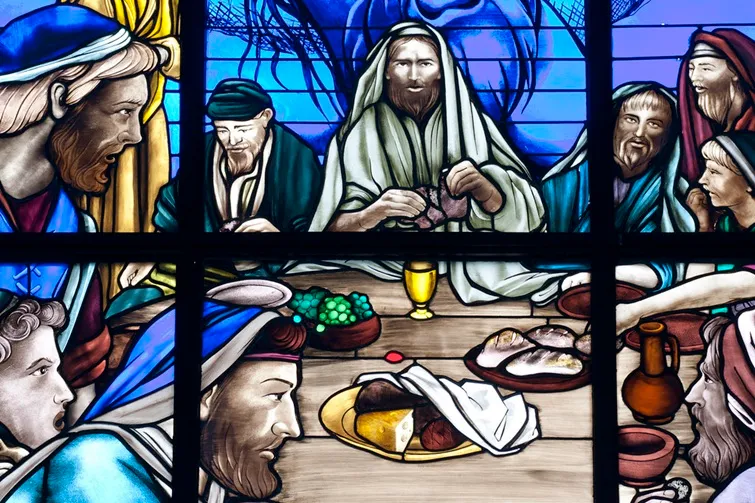
Traditionally identified as the site of the Last Supper and Pentecost, the Cenacle on Mount Zion is considered the “Mother of all Churches.” The current 12th-century Gothic Crusader architecture features pointed arches and a single carved column depicting a pelican feeding its young, a symbol of Christ. Gothic vaults and simple pillars evoke medieval austerity, preserving the site’s solemn and historic atmosphere.
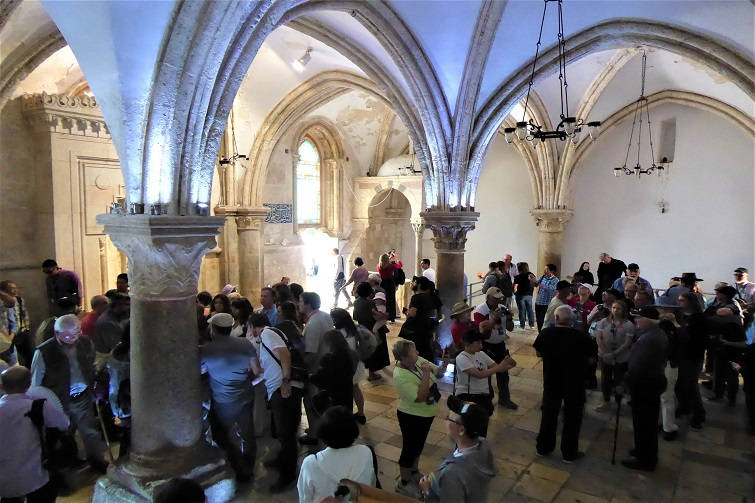
- Location: Mount Zion, just outside the Old City walls, above King David’s Tomb
- Opening Hours & Entry: Open daily from 8:00 AM to 6:00 PM (often 5:00 PM in winter). Entry is free.
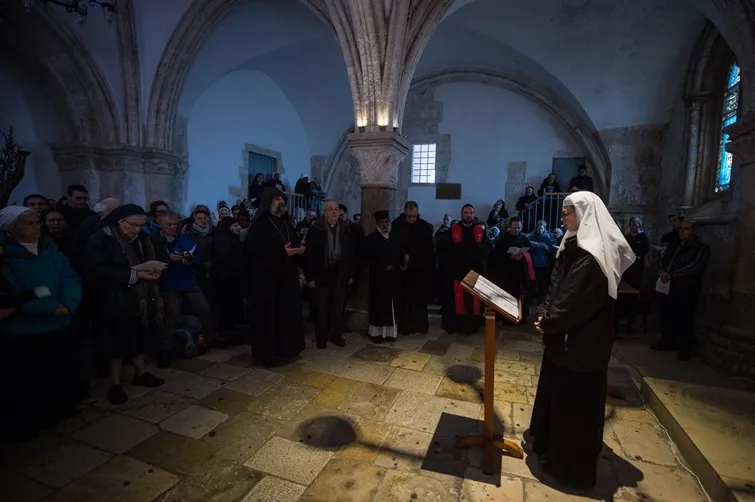
💡 My Tip: Because this is a shared holy site, formal religious services are not allowed. However, you are welcome to pray quietly or read the biblical passage (Luke 22) while inside.
2. Dormition Abbey
Denomination: Roman Catholic (Benedictine).
This massive German-built abbey marks the traditional site where the Virgin Mary “fell asleep.” The bright and spacious upper church contrasts with a circular crypt below, featuring a life-sized statue of Mary in repose surrounded by mosaics of notable women from the Bible. The Neo-Romanesque architecture, complete with large stained-glass windows, makes it a striking and contemplative pilgrimage site.
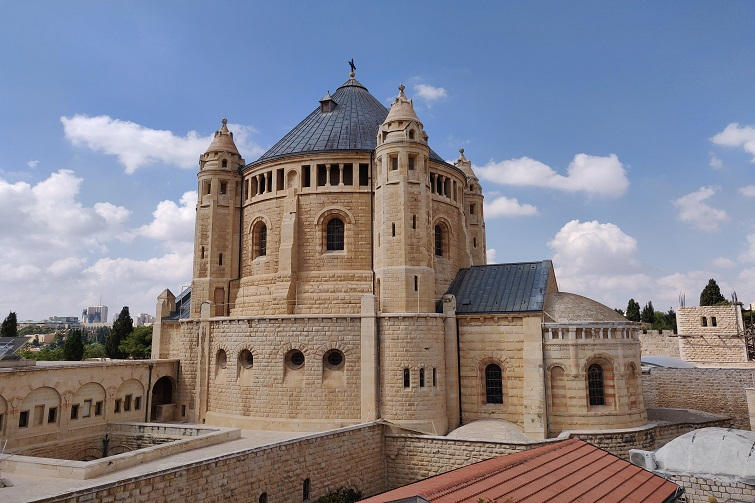
- Location: Mount Zion, just outside Zion Gate.
- Opening Hours & Entry: Open Mon-Sat from 8:00 AM to 12:00 PM and 2:00 PM to 5:00 PM. Entry is free but tower access is ~15-20 ILS.
💡 My Tip: The acoustics here are incredible. If you see a choir preparing to sing, stay and listen – it’s a heavenly experience.
3. Church of Saint Peter in Gallicantu
Denomination: Roman Catholic (Assumptionists).
Built on the eastern slope of Mount Zion, the Church of Saint Peter in Gallicantu marks the site of the High Priest Caiaphas’ palace, where Peter denied Jesus three times (“Gallicantu” means cock-crow). The multi-level church includes a modern upper chapel, a middle chapel featuring icons of the denial, and a lower level with ancient rock-cut pits traditionally believed to be a Byzantine-era prison.
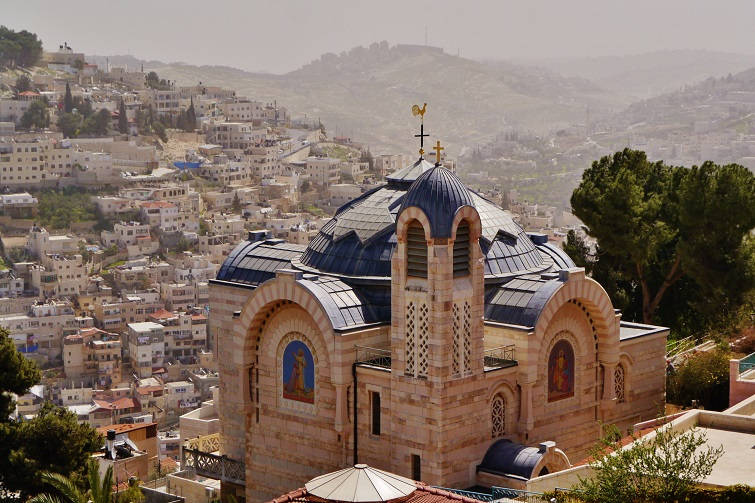
- Location: Eastern slope of Mount Zion
- Opening Hours & Entry: Open Mon-Sat 8:30 AM to 5:00 PM, closed on Sundays. Entry fee is ~10-20 ILS.
💡 My Tip: Walk outside to see the Sacred Staircase. These are authentic Roman-era steps that led from the Kidron Valley to the palace. Jesus almost certainly walked these stones after His arrest.
Ein Karem Churches
1. Church of the Visitation, Ein Karem
Denomination: Roman Catholic (Franciscan).
Situated on a hillside in Ein Karem, the Church of the Visitation marks the site where Mary visited her cousin Elizabeth (Luke 1:39–56). The courtyard walls display the Magnificat prayer in 42 languages, while the lower chapel houses an ancient spring and a “hiding stone” said to have protected the infant John the Baptist from Herod’s soldiers. Frescoed chapels and mosaics of the Magnificat adorn the interior, and the Baroque façade overlooks the surrounding valleys, making it a serene and historically rich pilgrimage site.

- Location: Ein Karem village
- Opening Hours & Entry: Open daily from 8:00 AM to 11:45 AM and 2:30 PM to 6:00 PM (5:00 PM in winter). Entry is free.
💡 My Tip: A steep climb leads to the church, but the views and peaceful atmosphere make it well worth the effort.
2. Church of St. John the Baptist
Denomination: Roman Catholic (Franciscan).
Built over the traditional birthplace of John the Baptist in Ein Karem, the Church of St. John the Baptist is a charming Spanish-influenced structure adorned with blue and white tiles. Visitors can descend into the Benedictus Grotto, the cave where John is believed to have been born. The site features a small basilica, a crypt, and historical frescoes, offering a serene and historically rich pilgrimage experience.
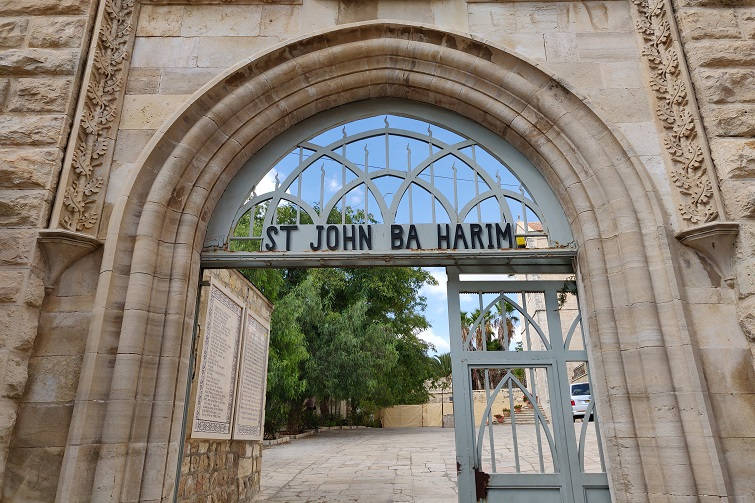
- Location: Ein Karem village
- Opening Hours & Entry: Open daily from 8:00 AM to 12:00 PM and 2:00 PM to 6:00 PM (5:00 PM in winter). Entry is free.
💡 Staying in Tel Aviv? Check out my post: A Day Trip to Jerusalem from Tel Aviv – it covers everything you need to plan the perfect visit.
Practical Tips for Visiting Churches in Jerusalem
Visiting Jerusalem’s churches is a deeply meaningful experience, but a little preparation can make your journey smoother and more rewarding.
- Dress modestly: Most churches require covered shoulders and knees for both men and women. Bringing a light scarf or shawl is useful, especially in summer.
- Start early to avoid crowds: Major churches and holy sites become busy by mid-morning, especially when tour buses arrive. Many locations involve waiting in line, particularly during religious holidays and weekends. Visiting early offers a quieter, more reflective atmosphere.
- Plan by area: The Old City, Mount of Olives, Mount Zion, and Ein Karem are best explored as separate walking routes. Grouping nearby sites saves time and energy.
- Wear comfortable shoes. Jerusalem’s streets are uneven and often steep, especially in the Old City and on the Mount of Olives. Good walking shoes are essential.
- Carry water and sun protection. Much of the sightseeing is outdoors, and shade can be limited, especially in summer.
- Respect worship and prayer. Many churches hold regular services. Keep noise low, avoid flash photography, and be mindful of people praying.
- Use guides wisely. Guided tours provide valuable historical and biblical context, while self-guided audio apps allow more flexibility. Choose what fits your travel style.
- Check opening hours in advance. Schedules may change on religious holidays or short notice, so verify before visiting key sites.
- Allow time for reflection. Don’t rush from church to church. Some of the most meaningful moments come from sitting quietly and absorbing the spiritual atmosphere.
FAQ: Churches in Jerusalem
Final Thoughts
Jerusalem’s Christian holy sites form a living tapestry of faith, history, and tradition. From the sacred chambers of the Church of the Holy Sepulchre to the quiet paths of the Mount of Olives, each stop brings the Gospel story to life in a powerful and personal way.
Whether you’re visiting as a pilgrim, a history enthusiast, or a curious traveler, these sites invite reflection, discovery, and connection. Take your time, walk thoughtfully, and let the city reveal its layers at your own pace.
If you have any questions or would like personalized recommendations, feel free to contact me – I’ll be happy to help you plan a meaningful journey through the Holy City.

Thank you for visiting my website!
I’m Moshe Barak, providing private transportation across Israel for international travelers for over 20 years.
Together with my team of dedicated drivers, I offer reliable, flexible, and personalized service – with close attention to detail and a personal touch. Whether you’re visiting for business or leisure, I’m committed to making your journey as easy and enjoyable as possible.
Feel free to reach out for a quote, I’ll be happy to assist.
I look forward to being part of your journey in Israel.
Warm regards,
Moshe Barak

One Last Thing…
✈️ Travel Insurance for Your Trip to Israel
Unexpected medical costs, flight changes, or lost baggage can quickly turn a great trip into a stressful one. Travel insurance helps you stay protected and enjoy Israel with peace of mind. Consider these two trusted, well-reviewed insurance providers:
Discover More of Israel
Travel guides, destination ideas, and practical tips to help you plan your trip
How to Get from Ben Gurion Airport to Ein Bokek
How to Get from Jerusalem to Bethlehem
Akko (Acre)
What to Eat in Israel
Eilat
Sherut in Israel
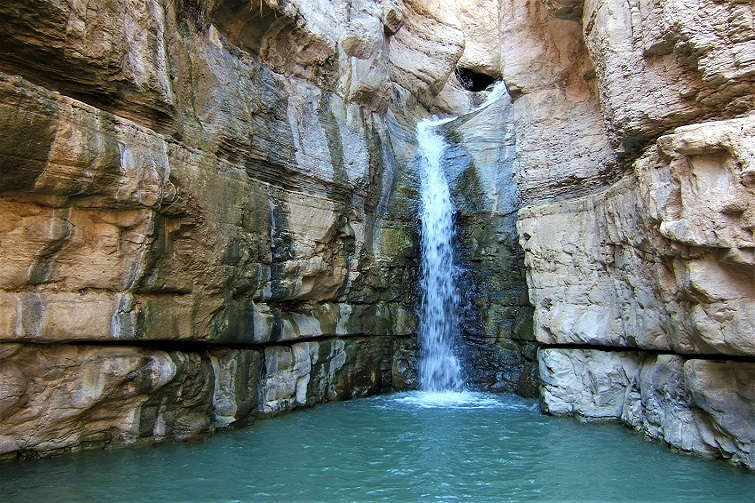
Ein Gedi
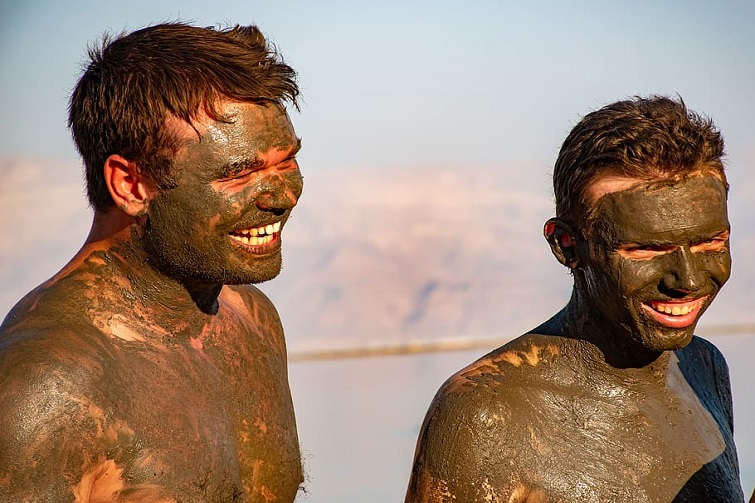
Dead Sea Attractions
Mount Zion, Jerusalem
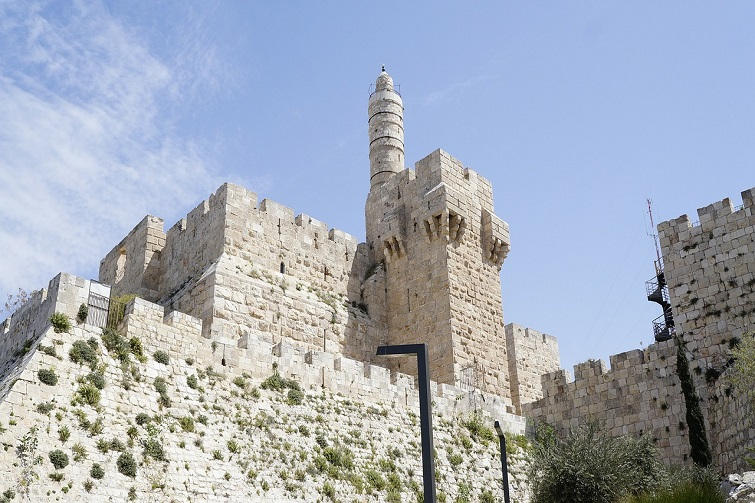
How to Get from Ben Gurion Airport to Jerusalem

Best eSIM for Israel